Condenser versus dynamic, and why it matters more than the price
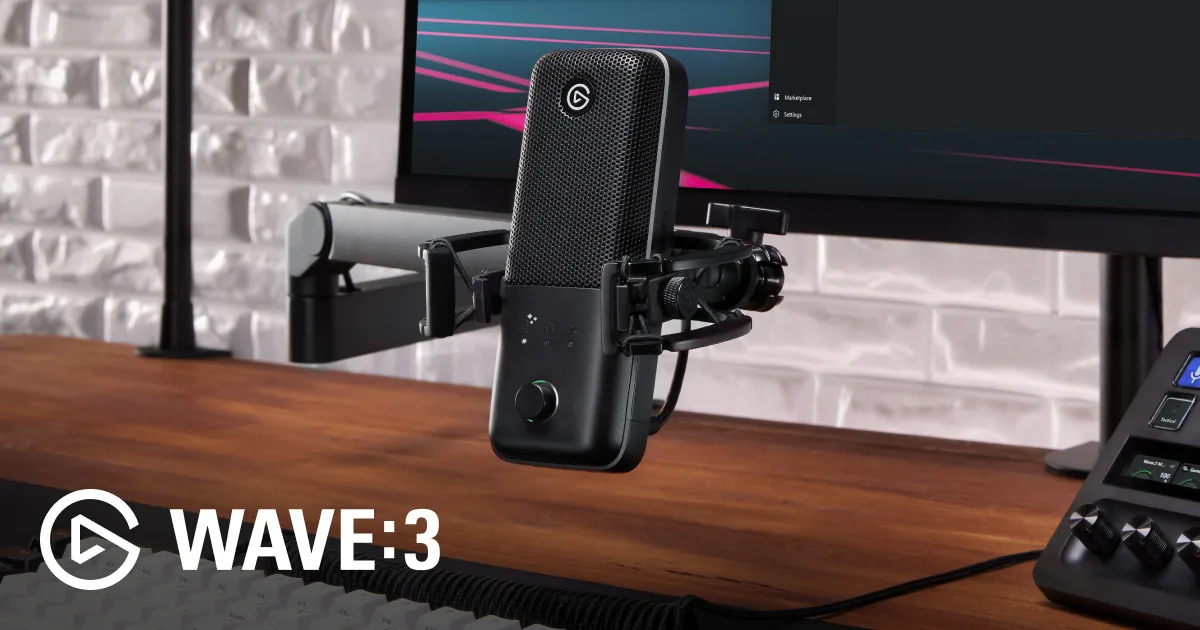
Most USB microphones sold for home use are condensers. They are sensitive, they capture detail, and in a treated studio they sound better.
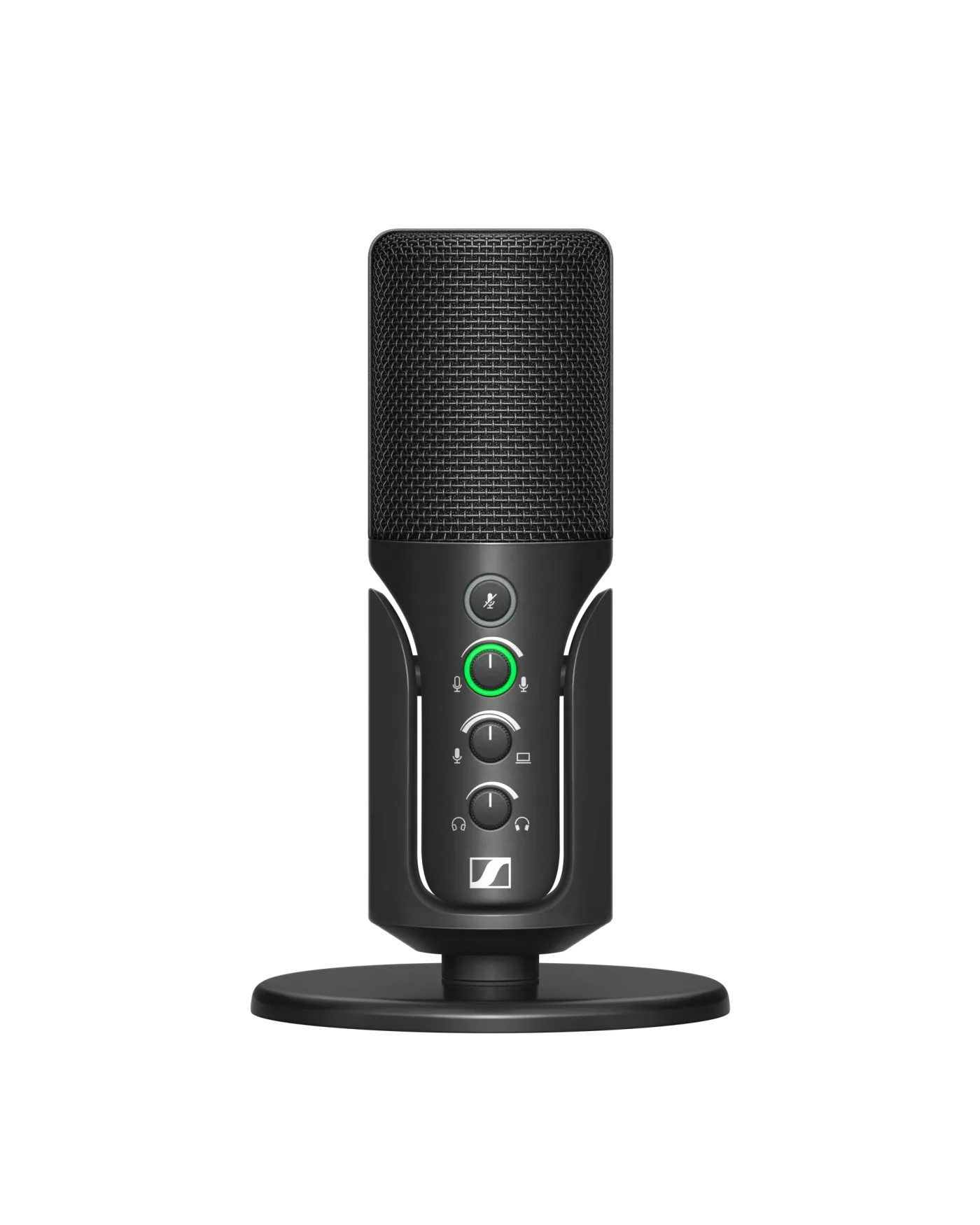
A home office is not a treated studio. It has a hard desk, a window, a bare wall, a laptop fan, a fridge in the next room and a road outside. A condenser captures all of that with the same enthusiasm it captures your voice, which is why so many people buy a Blue Yeti and sound like they are broadcasting from a bathroom.
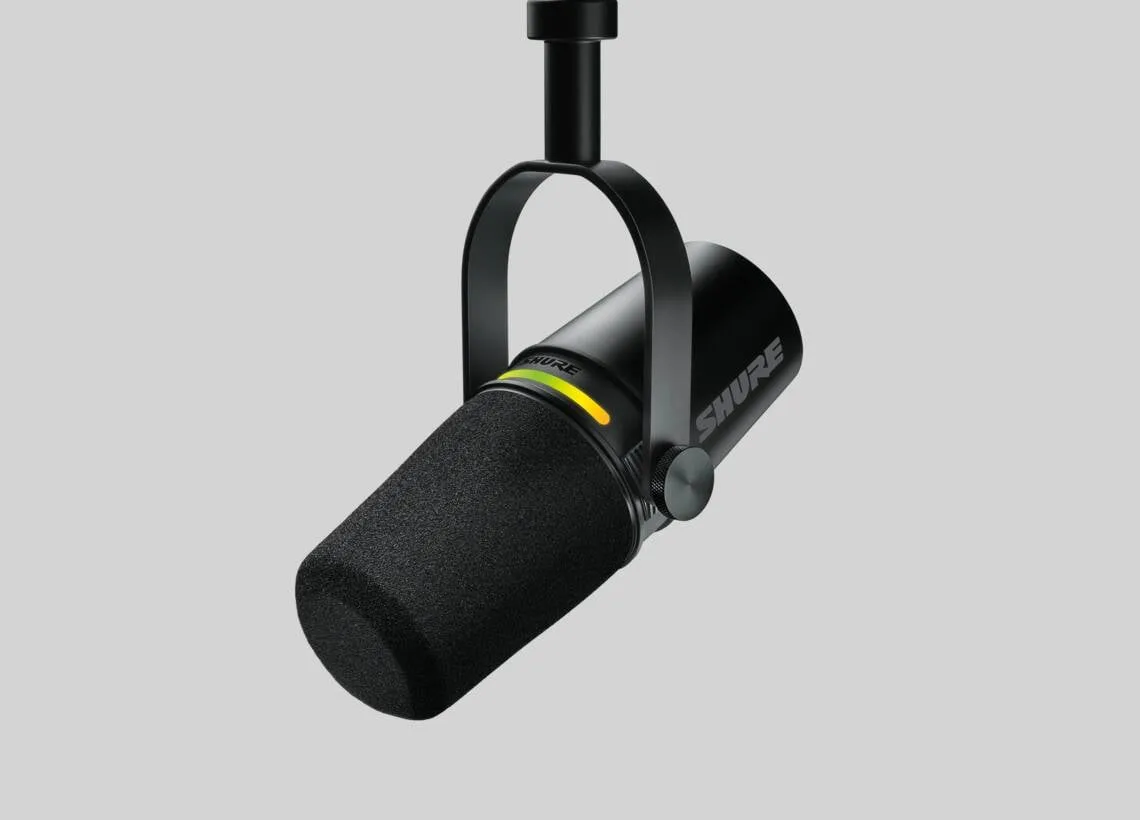
A dynamic microphone is far less sensitive and has a tighter pickup pattern. It hears what is directly in front of it at close range and largely ignores the rest of the room. That is a physical property of the capsule, not a processing trick, and it is the single biggest improvement most people can make to how they sound.
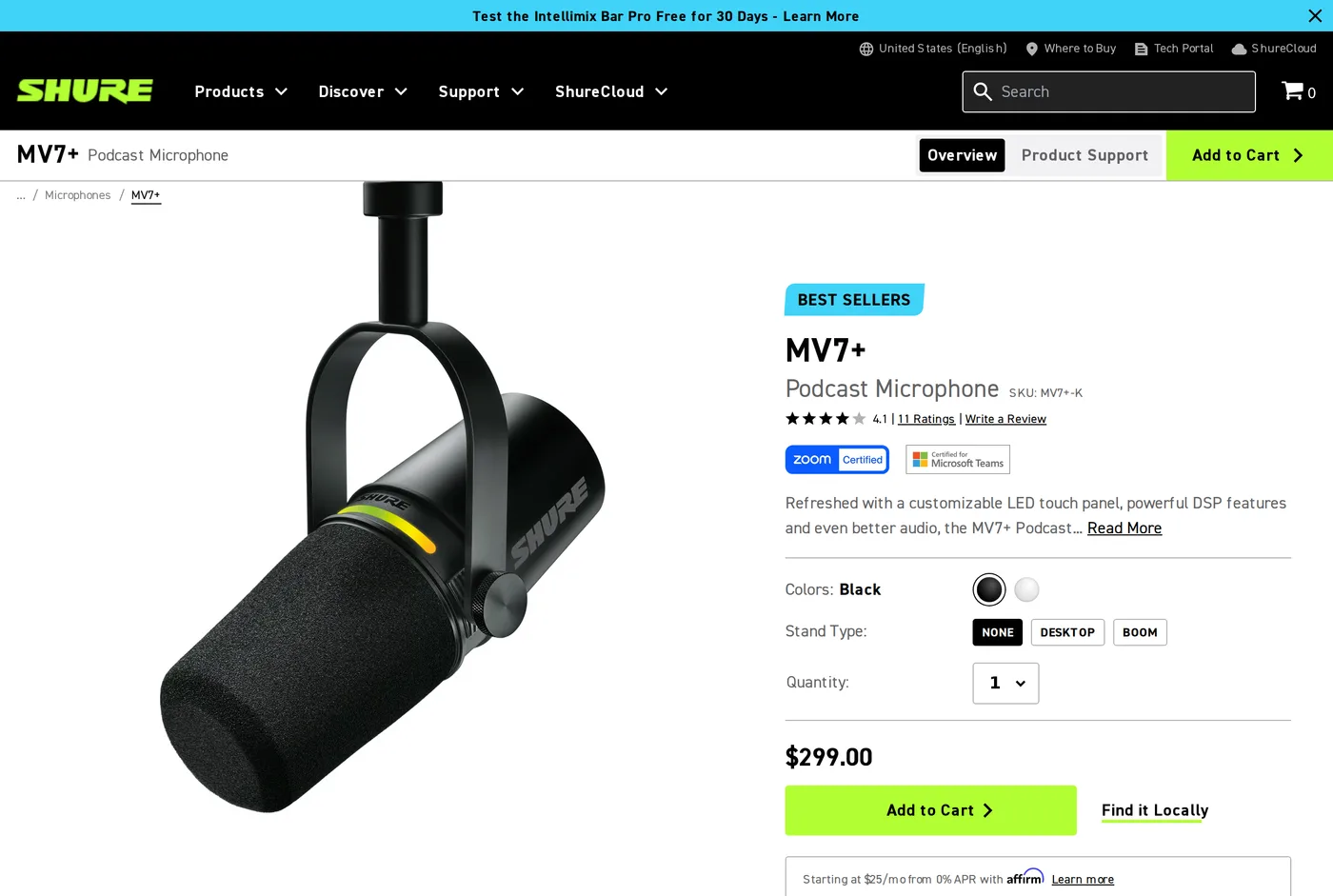
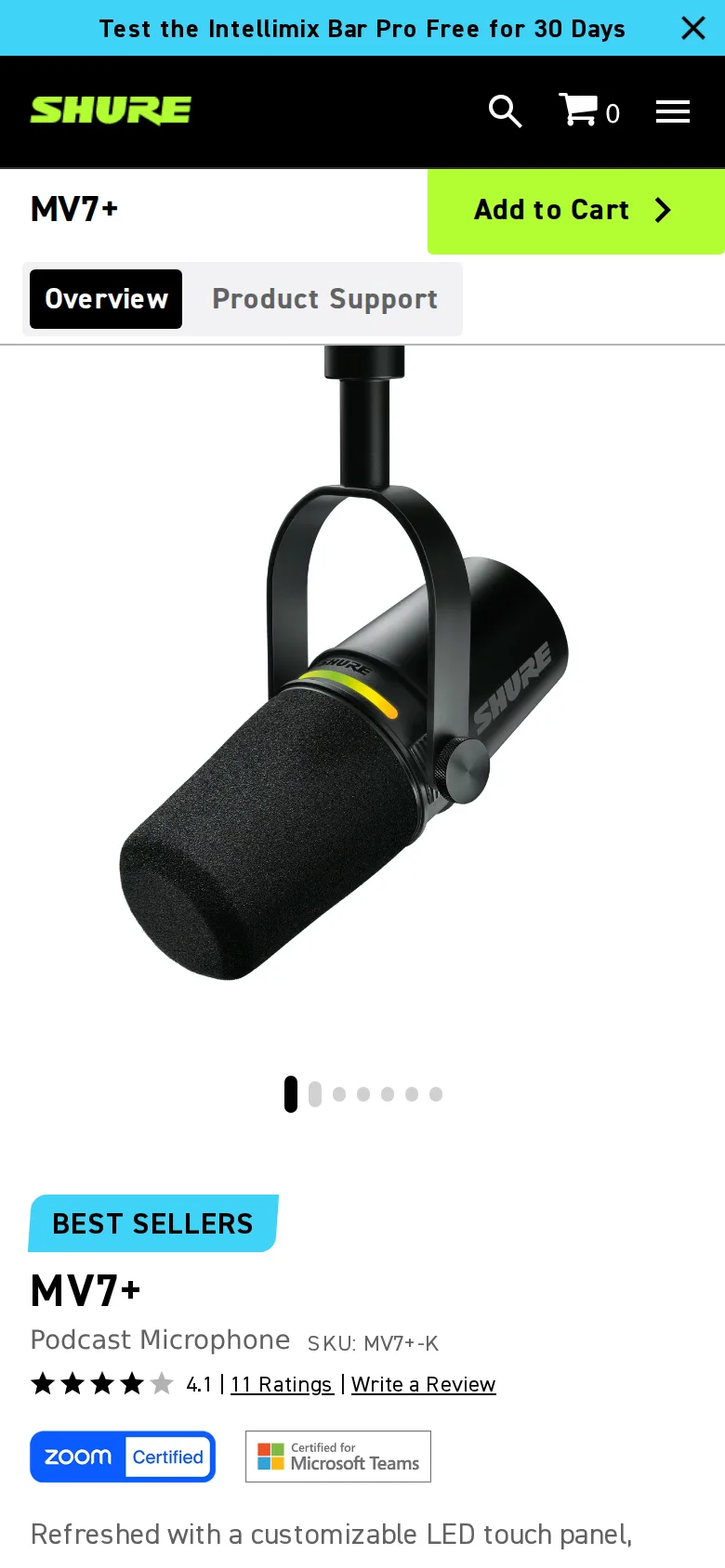
The MV7+ is a dynamic microphone. That is why it opens this category.
The one rule
You must be close to it. Ten to fifteen centimetres, which is closer than feels natural. A dynamic mic at arm's length sounds thin, distant and roomy — exactly what you were trying to avoid.
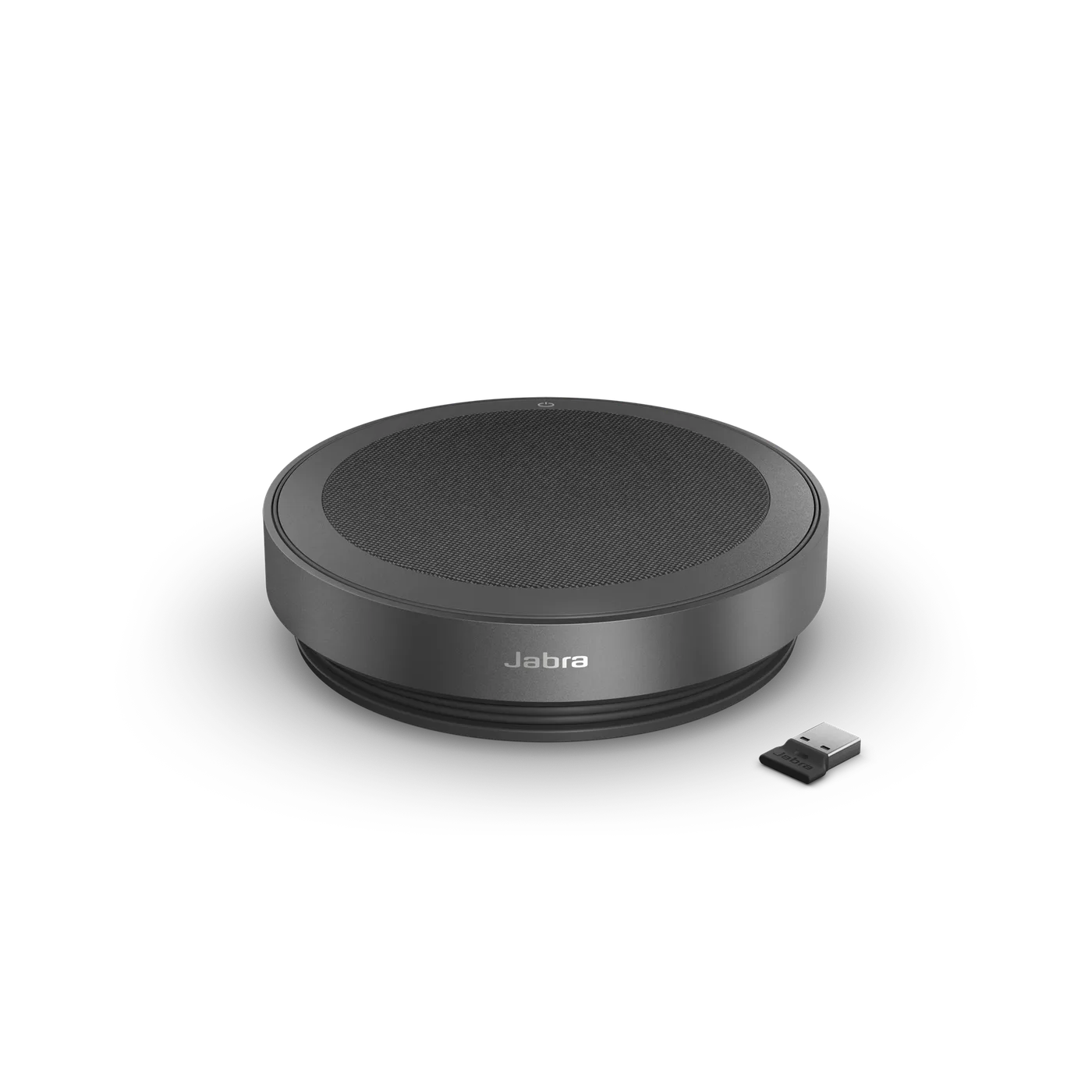
If you will not have the microphone in front of your face, buy a headset or a speakerphone instead. Every dynamic microphone review should say this in bold and almost none do.
The processing
Shure's DSP is the reason to buy the plus version rather than a bare dynamic mic and an interface.
Auto Level Mode watches your input and adjusts gain and compression as you go. For someone who will never learn what a compressor does, it produces a consistent, broadcast-ish level without clipping when you laugh. It is not what a careful engineer would do by hand; it is far better than what an untrained user does by hand.
The real-time denoiser is the standout. A steady background noise — a fan, traffic, a computer — gets attenuated without the swirling, underwater artefacts that cheap noise suppression produces. It is not magic and it will not remove a barking dog, but on constant noise it is excellent.
The digital popper stopper handles plosives well enough that you can skip a pop filter, which is one fewer object between you and the screen.
USB and XLR, on the same body
This is the reason to choose the MV7+ over cheaper dynamics. Plug it into a laptop over USB-C today with no interface. In two years, if you buy an audio interface, the same microphone plugs in over XLR and becomes a purely analogue mic in a better chain.
Almost nothing else in this category gives you both, and it means the purchase does not become obsolete when your setup grows.
What it needs that is not in the box
A stand or a boom arm. The MV7+ is heavy, and cheap spring boom arms will sag under it within a week. Budget properly here — a well-made arm is the difference between the microphone being in the right place and being somewhere behind your monitor.
Headphones plug into the microphone for zero-latency monitoring, which is genuinely useful for hearing your own plosives.
Placement, which matters more than settings
Where you put a dynamic microphone changes it more than any control on it.
Off to one side, angled in. Directly in front of your mouth puts it in the path of your breath and every plosive. Set it slightly off to one side at roughly 45 degrees and you keep the proximity without the blasts.
Below the chin, pointing up, is the podcast convention and the one we prefer at a desk: it keeps the microphone out of the camera frame and off the screen.
Off the desk. A microphone on a desk stand transmits every keystroke through the surface. On a boom arm clamped to the desk it still picks up some, but far less, and a shock mount removes most of the rest.
Move it 10 cm further away and you can hear the room come in. That is the proximity effect doing what it is supposed to do, and it is why the ten-to-fifteen-centimetre rule is not fussiness.
The LED panel
It lights up, it is customisable, and you can tap anywhere to mute. The mute tap is useful. The rest is decoration, and it is the part of the product that most clearly exists because a product page needed a visual.
Verdict
8.8. Expensive for a home office, and the right answer for a home office that sounds like a home office. The dual output is what turns it from a purchase into an investment.
What holds up
- Dynamic capsule rejects room reflections and background noise by design, not by processing
- USB-C and XLR on the same body: start simple, upgrade the chain later without rebuying
- Auto Level Mode is genuinely good for people who will never touch a gain knob
- Real-time denoiser handles a fan or a distant road without the underwater artefacts
What wears thin
- $299 before a stand or boom arm, which it needs
- Must be close — 10–15 cm — or it sounds thin and distant
- The LED touch panel is prettier than it is useful
- Heavy enough to droop on a cheap boom arm