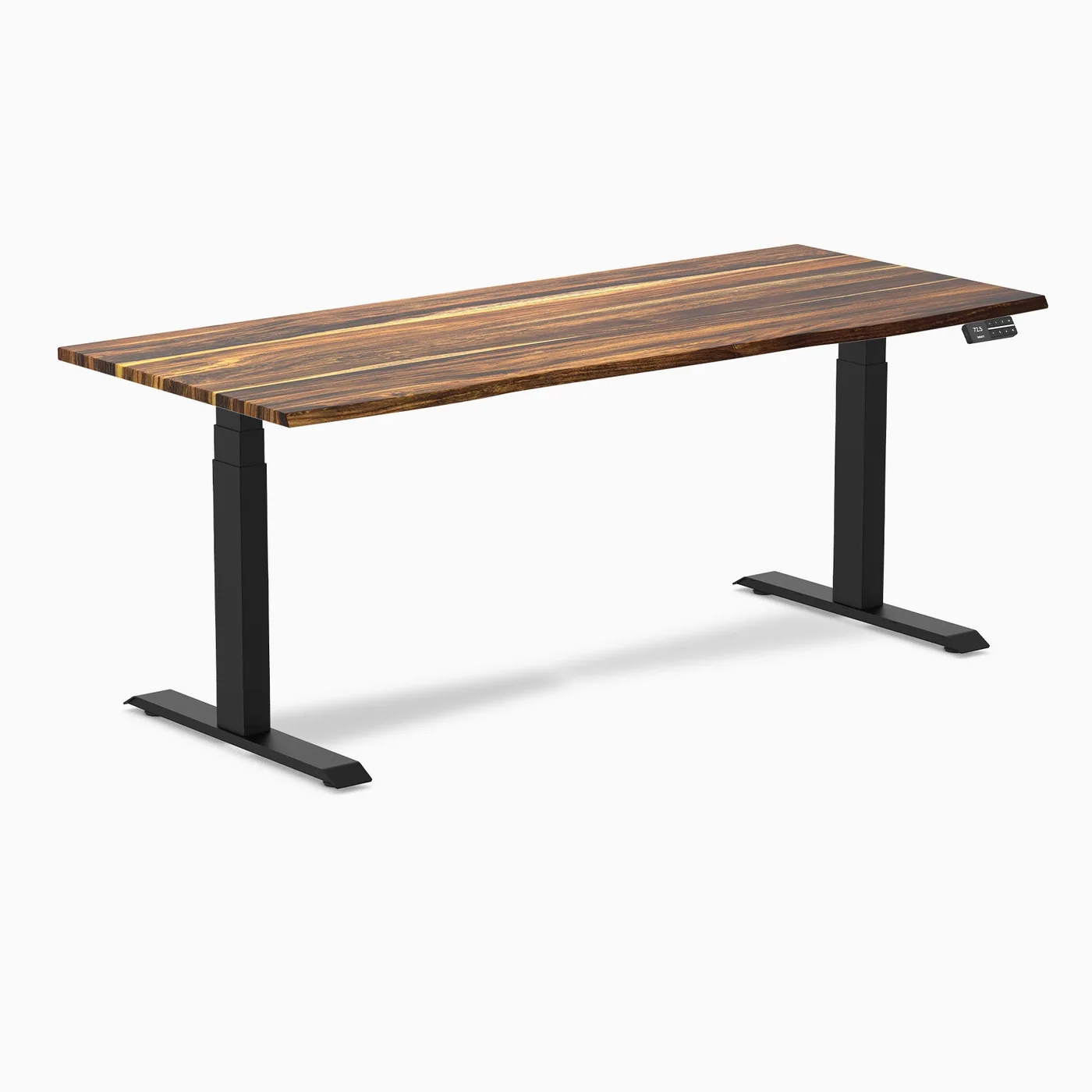
Why the top matters here
Most "wood" standing desks are a veneer or a printed laminate over particle board. That is not an insult — a good laminate is flat, stable, cheap and durable, and we recommend one on the Uplift review a few pages over. But it is not wood, and if what you want is the thing timber does to a room, no laminate will do it.
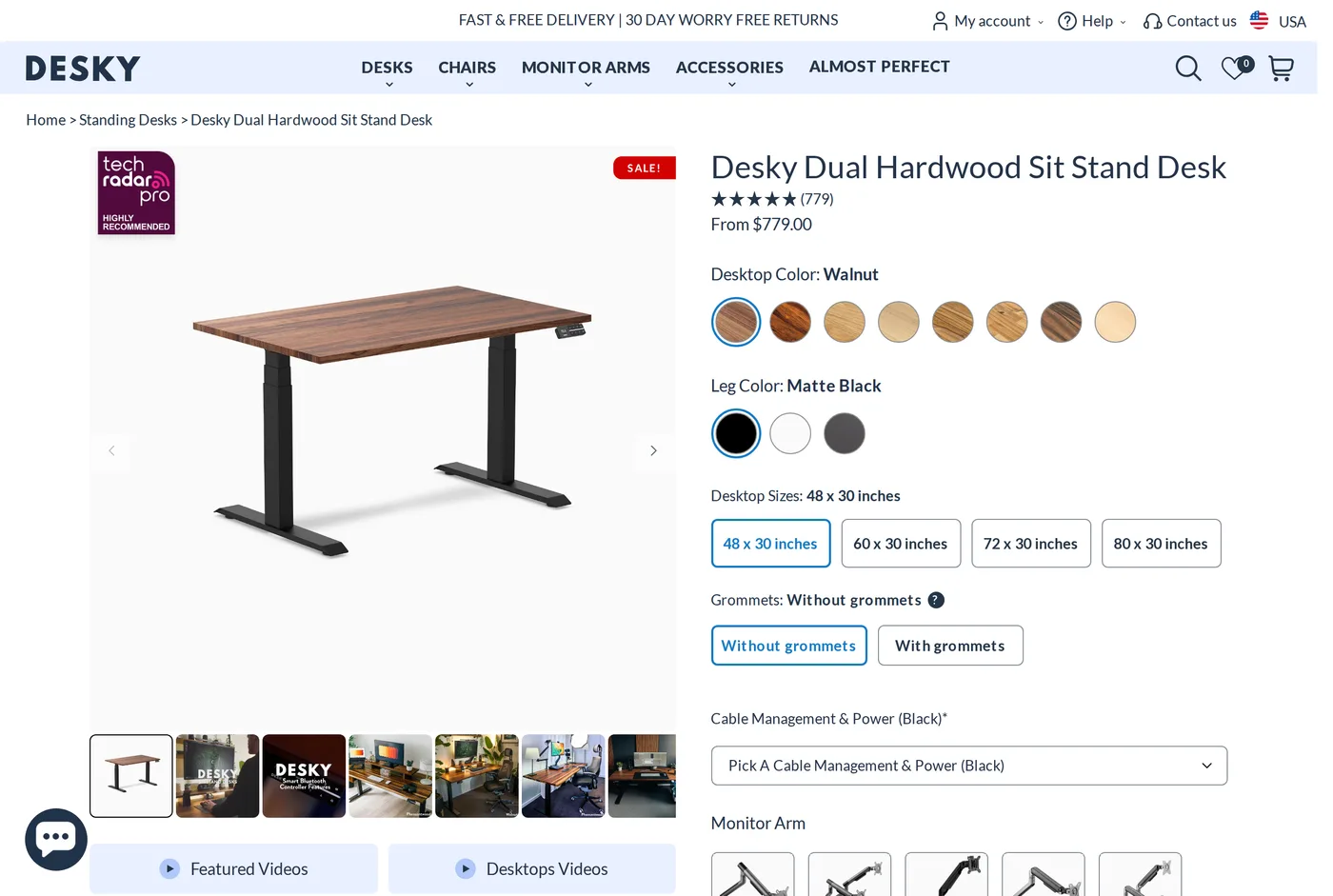
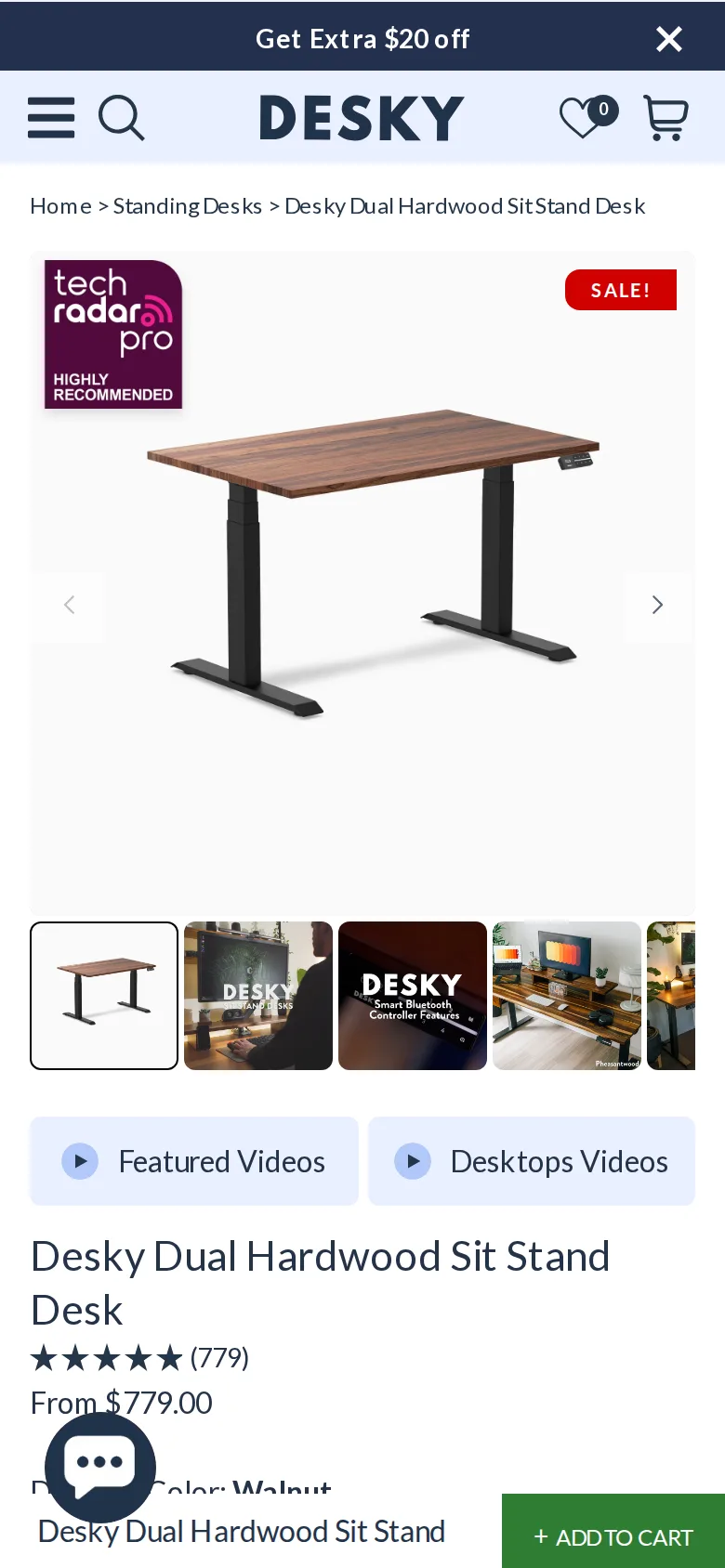
The Desky Dual Hardwood is solid timber. At $779 for the entry configuration, that is roughly what a good veneer desk costs elsewhere, and a third of what Ergonofis charges for the same idea. On material alone it is the best value in this category by a wide margin.
The frame underneath
Three-stage, dual-motor. Three stages means each leg telescopes twice rather than once, which buys you a wider height range and — more usefully — a lower minimum height, so shorter users can actually sit at it properly.
Stability is very good. The heavy top helps: mass damps movement, and a solid timber surface is doing more structural work than a 19 mm board ever could. At full standing height with a monitor arm loaded, the desk settles quickly after a knock.
Transitions are quick and quiet. Desky quote around ten seconds from sitting to standing and we did not find reason to argue.
The part nobody writes down
Solid wood moves. It expands and contracts with humidity, it dents where laminate would scuff, and it wants oiling once or twice a year depending on the finish and the room. A hardwood desk in a room that swings from a damp winter to a dry heated spring will develop small gaps and close them again — that is timber behaving normally, not a defect.
Practical consequences:
Do not put it in a conservatory or hard against a radiator.
Use coasters. Water rings on oiled timber are permanent in a way they are not on laminate.
Budget an hour a year for a coat of oil. It is not difficult and the desk looks better for it.
If that list sounds like a chore rather than a pleasure, buy a laminate top and spend the difference elsewhere. We are not being rhetorical: plenty of people want a desk, not a piece of furniture to look after.
Sizes, and the weight problem
Desky sells a wide range of sizes, and the larger solid-timber tops are genuinely heavy. The top alone on a large configuration is a two-person lift, and the assembled desk is not something one person repositions casually.
Account for this before ordering: get the desk to the room it will live in before you build it, and make sure the doorways work.
Choosing a species
Desky offer several hardwoods and the choice is not only cosmetic.
Rubberwood is the entry point and the one at the price we quoted. It is a genuinely hard timber, pale, with a busy grain from the finger-jointed construction. It takes a knock well.
The darker options and the larger slabs cost considerably more and, in our view, buy you appearance rather than durability. If the desk is going in a room where it is furniture, that may be exactly the right spend; if it is a working surface, the cheapest hardwood is the same desk.
Whatever you choose, check the stated thickness. A thicker top is stiffer, heavier and better, and it is the specification that most affects how the finished desk feels.
Assembly
Roughly an hour with two people, and the two-person requirement is not negotiable here — the top is too heavy to flip alone without risking the finish or your back.
The frame goes together conventionally: legs to feet, legs to crossbar, crossbar to top, then the control box and the keypad. Desky pre-drill the top, which removes the single most nerve-racking step of building a desk around a solid timber slab.
One practical note: do the first oiling before you build it, not after. Oiling the underside and edges of a slab that is already bolted to a frame is a bad afternoon.
The accessory catalogue
Desky sell monitor arms, drawers, cable trays and mats that fit their frames. Quality is mixed but fair for the money, and the cable management channel is included with the desk rather than being an upsell, which is a small kindness the category rarely offers.
Against Ergonofis
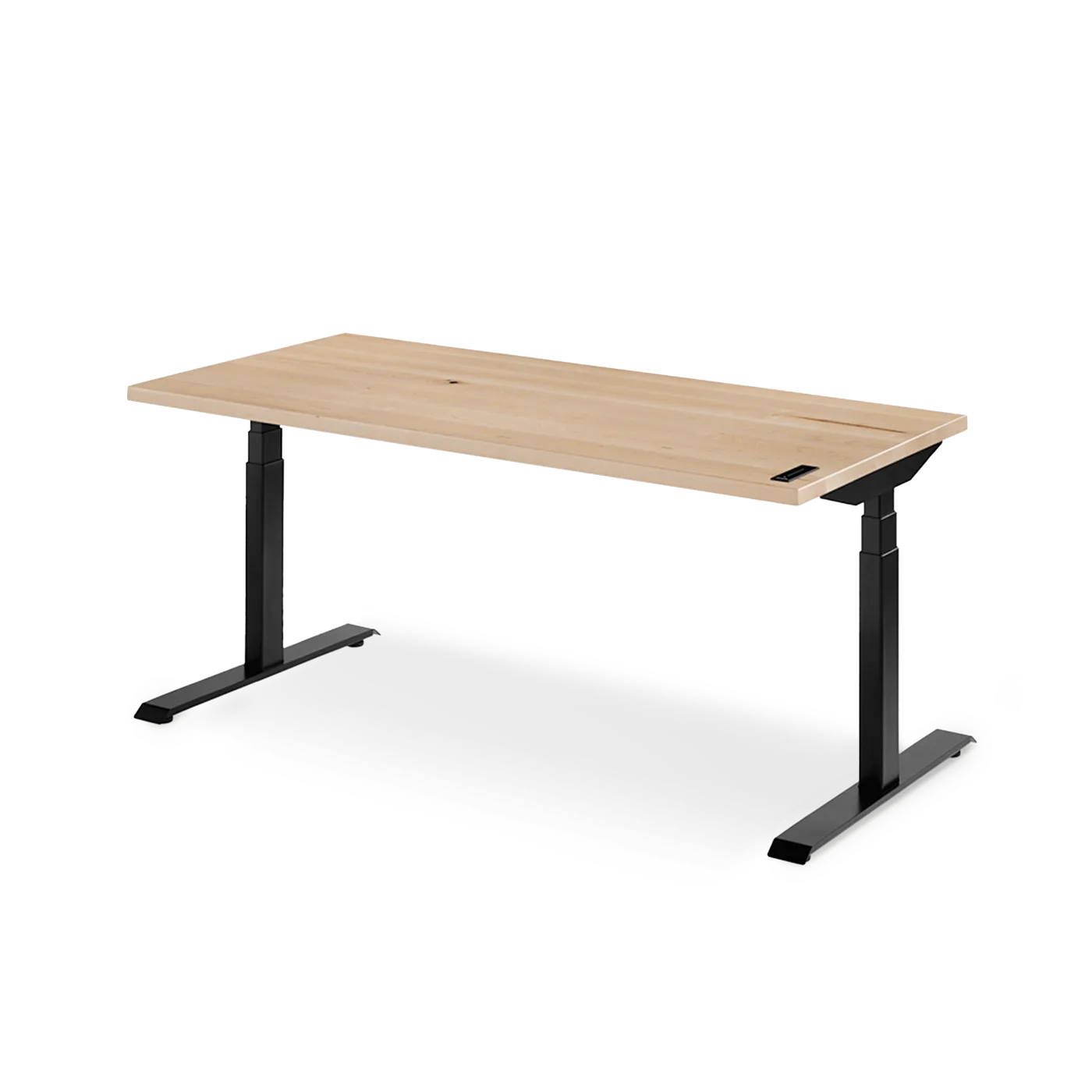
The obvious comparison is the Ergonofis Sway, which is the same idea — solid wood on a good frame — at roughly three times the price. The Sway is better finished, made in Canada, and carries a longer warranty. It is also $2,295 CAD.
Unless the provenance matters to you specifically, the Desky is the sane purchase. It is the same material doing the same job, and the money you save buys a monitor arm, a chair upgrade and a light.
Verdict
An 8.1: a very good desk with a maintenance obligation attached. The obligation is the price of the material, and the material is the point.
What holds up
- Actual solid hardwood, not veneer over board, at a price veneer desks charge
- Three-stage dual-motor frame: fast, quiet and stable at full height
- Wide range of sizes and a large accessory catalogue that fits the frame
- Cable management channel included rather than sold separately
What wears thin
- Solid timber moves with humidity and needs oiling once or twice a year
- Heavy — the top alone is a two-person lift
- The desktop arrives needing a first coat in some finishes
- Delivery times vary a lot by region and size