What you are buying
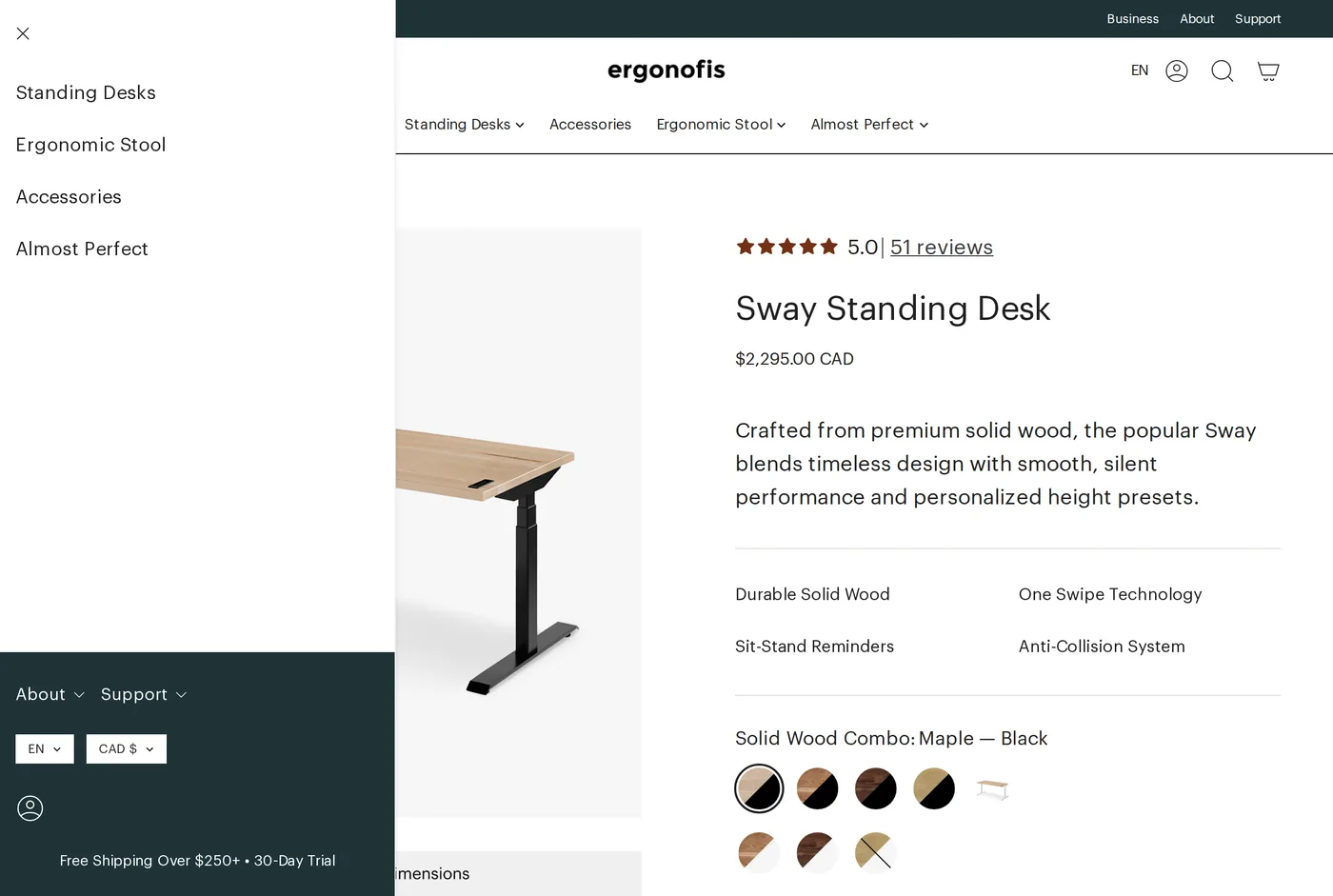
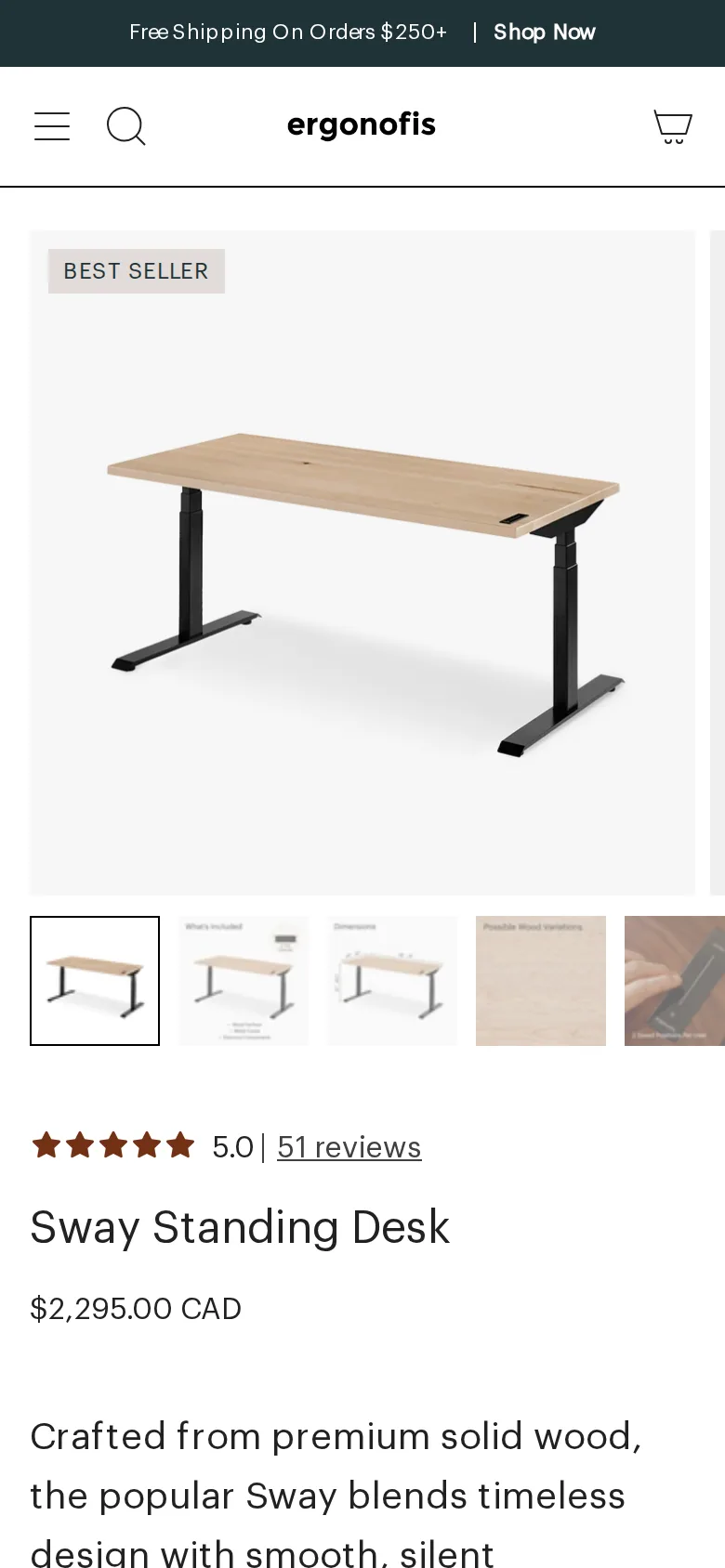
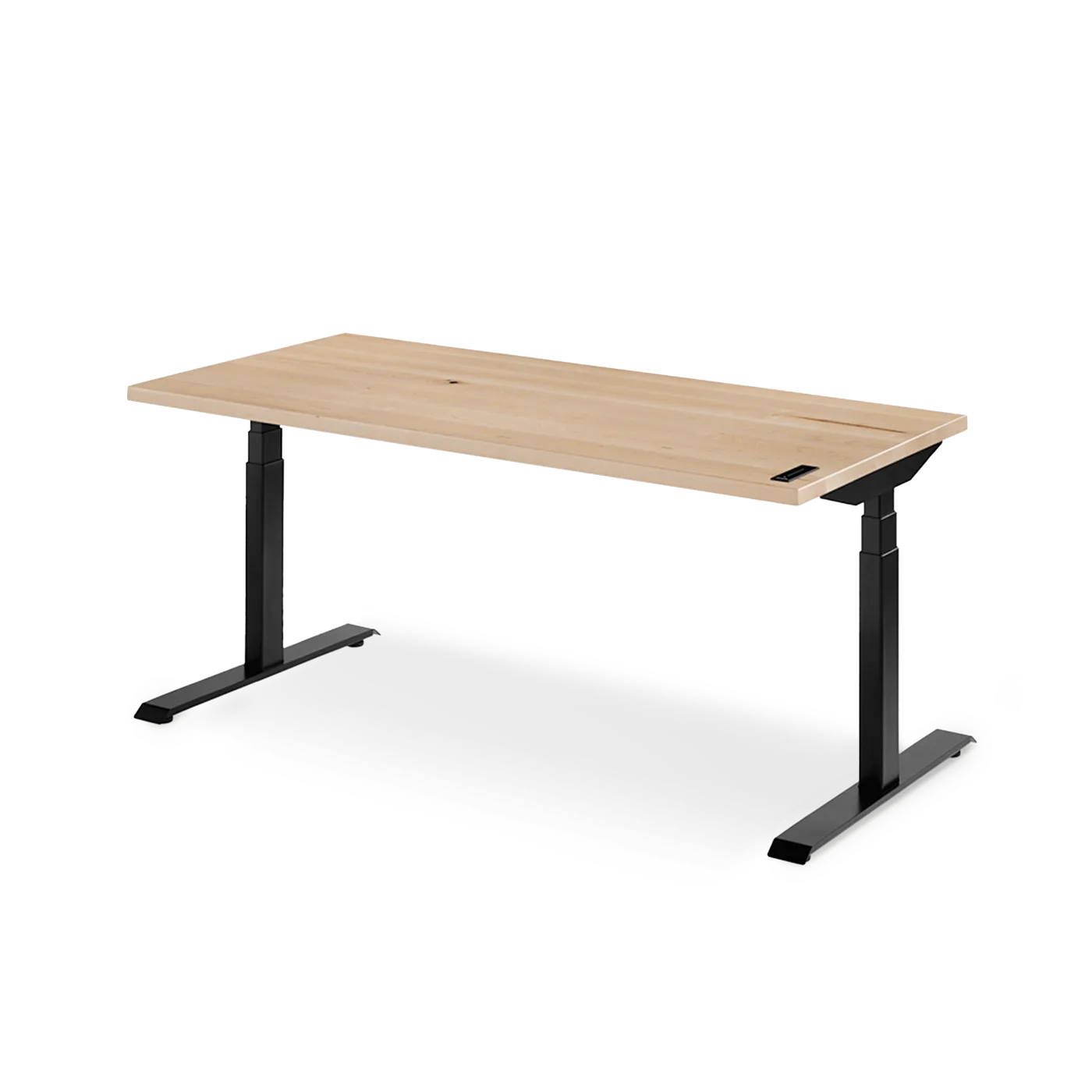
Solid maple, cherry, walnut or white oak, sourced in Canada, on a frame with inline motors and a capacitive swipe strip along the front edge for height control. Three sizes: 24 × 48, 30 × 60 and 30 × 72. Ten-year limited warranty. Thirty-day trial with free returns. $2,295 CAD for the middle size at the time of writing, and considerably more for the largest configurations.
Everything in that paragraph is true and well executed. The finish is better than anything else in this review — the edges are properly eased, the grain match across the top is careful, and the underside is finished as well as the top, which almost nobody does.
The swipe control
Instead of buttons, there is a touch strip along the front edge. Swipe right, the desk rises; swipe left, it falls; tap for a preset. It is a lovely piece of interaction design and it works far better than the description implies — the response is immediate and proportional, and after a day you stop looking down for it.
There is one real flaw. Reaching across the front edge for something on the far side of the desk occasionally triggers it. Not often, not dangerously, but enough that we would rather have a discreet physical control.
The operation is genuinely silent
Ergonofis use inline motors and the difference is audible, or rather it is not. This is the quietest sit-stand mechanism we have used, to the point where you can raise the desk mid-call and nobody notices. If you share a room with someone who is also working, that is worth more than it sounds.
The sizes, and the one that is missing
Three: 24 × 48, 30 × 60 and 30 × 72. The 30 × 60 is the one most people want and the one we tested.
The gap in the range is a genuinely small desk. Branch will sell you a 36 × 24 that suits an alcove; Ergonofis start at 24 × 48, which is a metre and a quarter wide and needs a wall to itself. If your room is the constraint, this range does not have an answer for you.
Grommets are an option rather than a default, and they are worth taking. Drilling a hole through a finished solid walnut top afterwards is not a job anyone enjoys.
Made in Canada, and where that shows up
Ergonofis source their timber in Canada and assemble there, and the difference is visible in places that do not photograph well.
The underside is finished to the same standard as the top. The edges are eased consistently along their whole length rather than rounded at the corners and left sharp in the middle. The grain across the width of our sample was matched rather than assembled from whatever was in the rack. Screw holes are clean, with no torn fibres around them.
None of this makes the desk work better. All of it is what you are paying for, and it is fair to say that it is real rather than a story.
The price
Here is where this review stops being a list of nice things.
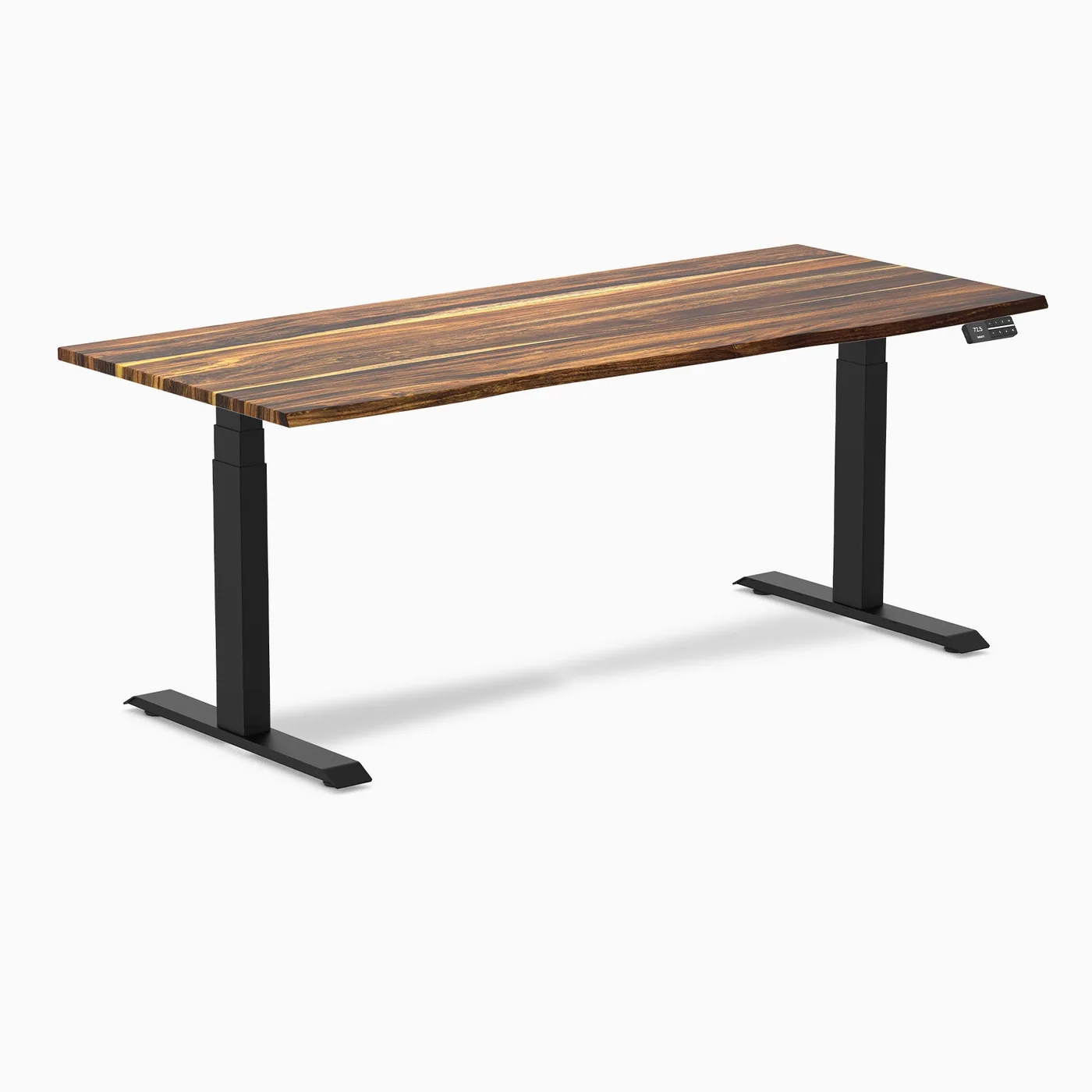
The Desky Dual Hardwood, reviewed elsewhere on this site, is solid timber on a three-stage dual-motor frame from $779. It is stable, quiet enough, adjustable over a wider range, and available in more sizes. It is not as beautifully finished. It does the same job.
The Sway is roughly three times that. For the difference you could buy the Desky, a Herman Miller Embody second-hand, a monitor arm and a good task light, and have change.
We have tried to build the performance argument and it is not there. The Sway is not more stable. It does not lift more. Its warranty is ten years against Uplift's fifteen. What it is, unambiguously, is nicer — better wood, better finish, quieter, and made somewhere you can point to on a map.
When that is the right call
There are rooms where the desk is furniture first. A studio a client walks into. A living room where a grey frame would be a daily small offence. A house where everything else is considered and the desk is the thing letting it down. In those rooms, the Sway is the answer and the price is the price of furniture, not of equipment.
If your desk lives in a spare room that nobody visits, you are paying $1,500 for something you will stop noticing in a week.
The trial is the safety net
Thirty days, free returns, on an object weighing this much, is a serious commitment from a company this size and it should count in their favour. If you are on the fence, the downside is bounded.
Verdict
A 7.6, which is a good score attached to a difficult recommendation. We would be delighted to own one. We would not advise most people to buy one.
What holds up
- Genuinely beautiful solid wood, locally sourced and properly finished
- Swipe-to-adjust height control works better than it sounds
- 10-year limited warranty and a 30-day trial with free return shipping
- Silent in operation — the quietest desk mechanism we have used
What wears thin
- Three times the price of a comparable solid-timber desk that performs the same
- Only three sizes, and the smallest is 24×48
- The swipe control is easy to trigger by accident when reaching across
- Premium finishes push a $2,295 desk well past $3,000