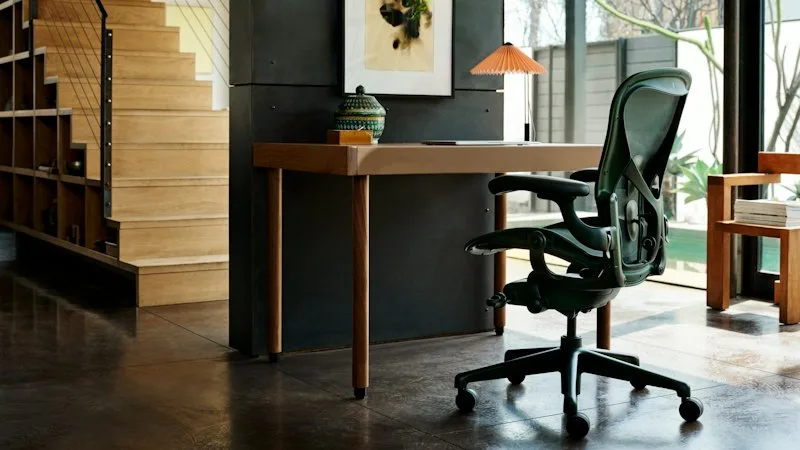
Buying an Aeron new is close to the worst way to buy an Aeron. That is not a criticism of the chair — it is a consequence of how good it is. Herman Miller still sells parts for chairs built two decades ago, offices replace them in batches, and a refurbished size B in good condition routinely sells for less than half the list price. Any honest review has to start there, because the value question is completely different depending on which chair you are buying.
With that said: the chair itself deserves its reputation, and we would still rather sit in a 2012 Aeron than in most things sold new today.
Sizes are the whole review
The Aeron comes in A, B and C. B is the medium and it fits most adults; A is small and C is large, and both are much rarer second-hand, which matters if you are shopping used. The sizing is not a preference — the frame geometry, seat width and back height all change, and sitting in the wrong one undoes the point of the chair.
The mistake we see most often is a tall, light person buying C because they are tall. Height matters less than hip width and femur length. If you are between sizes, the practical test is whether you can get three fingers between the front edge of the seat and the back of your knee with your spine against the back. If you cannot, you are in a size too big.
What the remaster actually changed
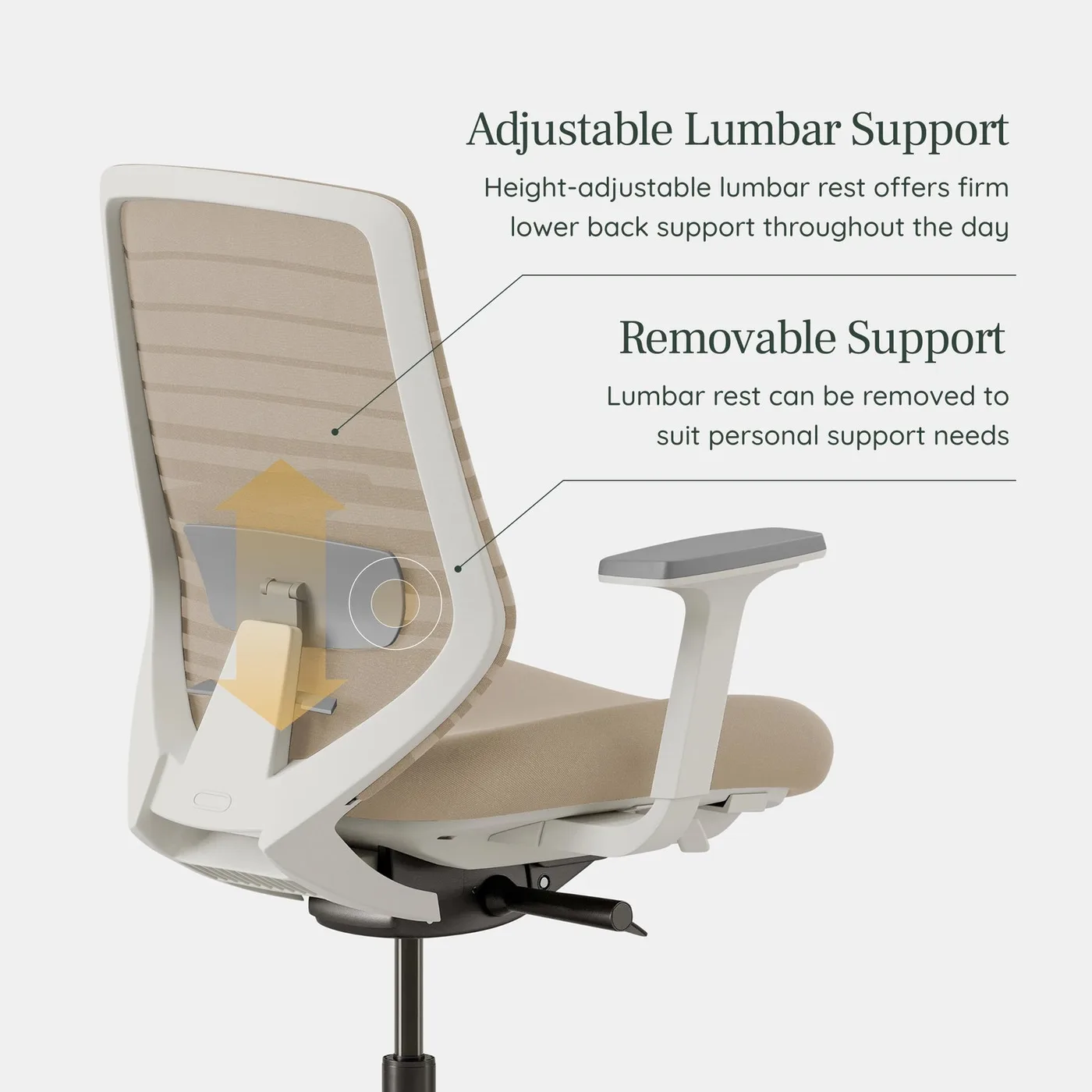
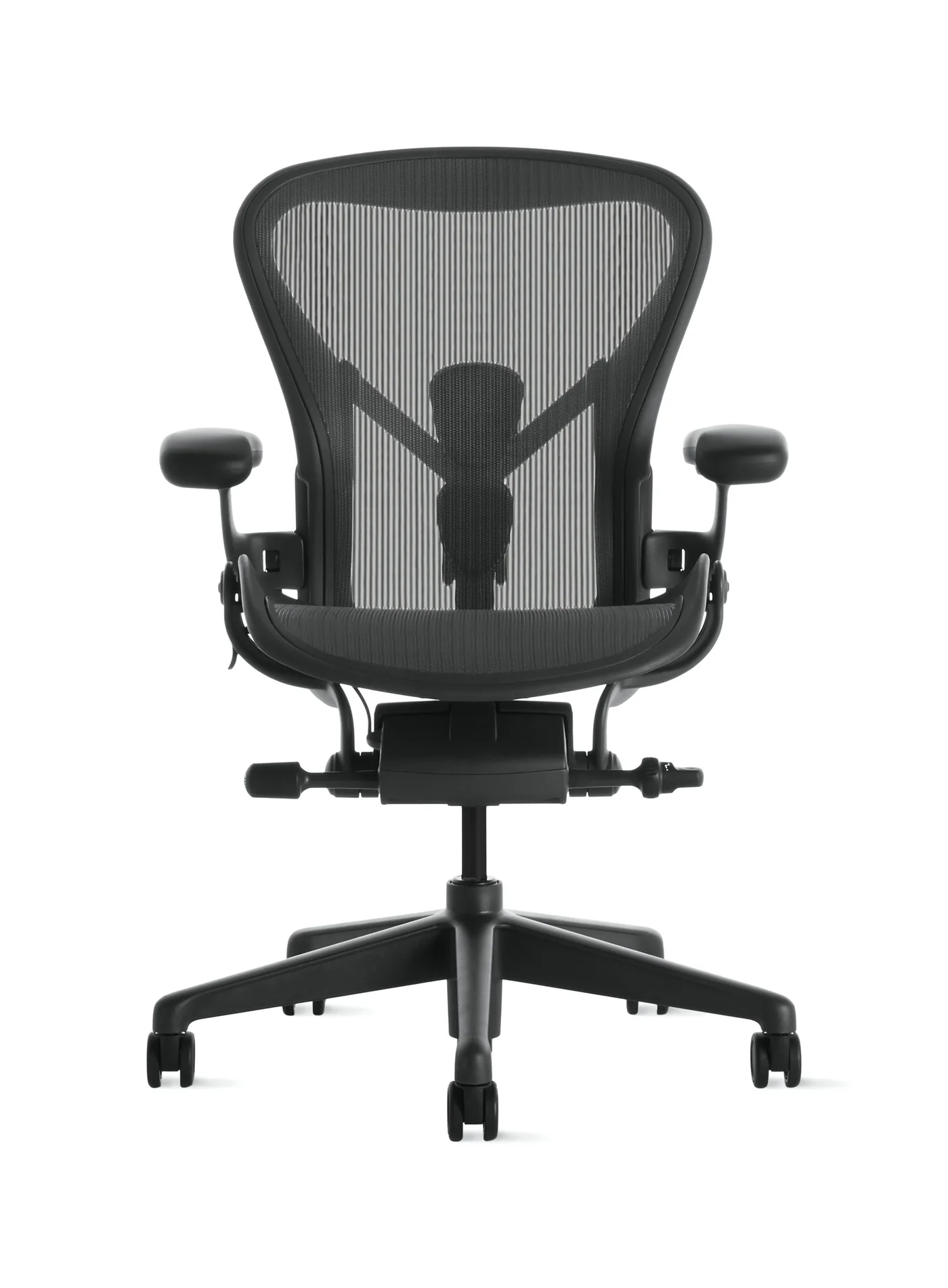
The 2016 remaster is the one to want. The 8Z Pellicle mesh has eight tension zones instead of the older two, which fixes the single most common complaint about early Aerons: a hard ridge under the thighs. The tilt mechanism is smoother and quieter, and PostureFit SL replaced the old single lumbar pad with two independently adjustable pads that push on the sacrum as well as the lumbar spine.
That last part is the bit worth paying for. Most lumbar systems are a bump in the middle of your back. PostureFit SL supports the base of the spine, which is where slouching actually starts. After a week you stop noticing it, which is the correct outcome.
Where it is beaten
The Aeron has no seat-depth adjustment. Not on any size, not as an option. A Steelcase Leap gives you about 100 mm of slide for less money, and for people with unusual femur-to-torso proportions that single feature outranks everything the Aeron does well.
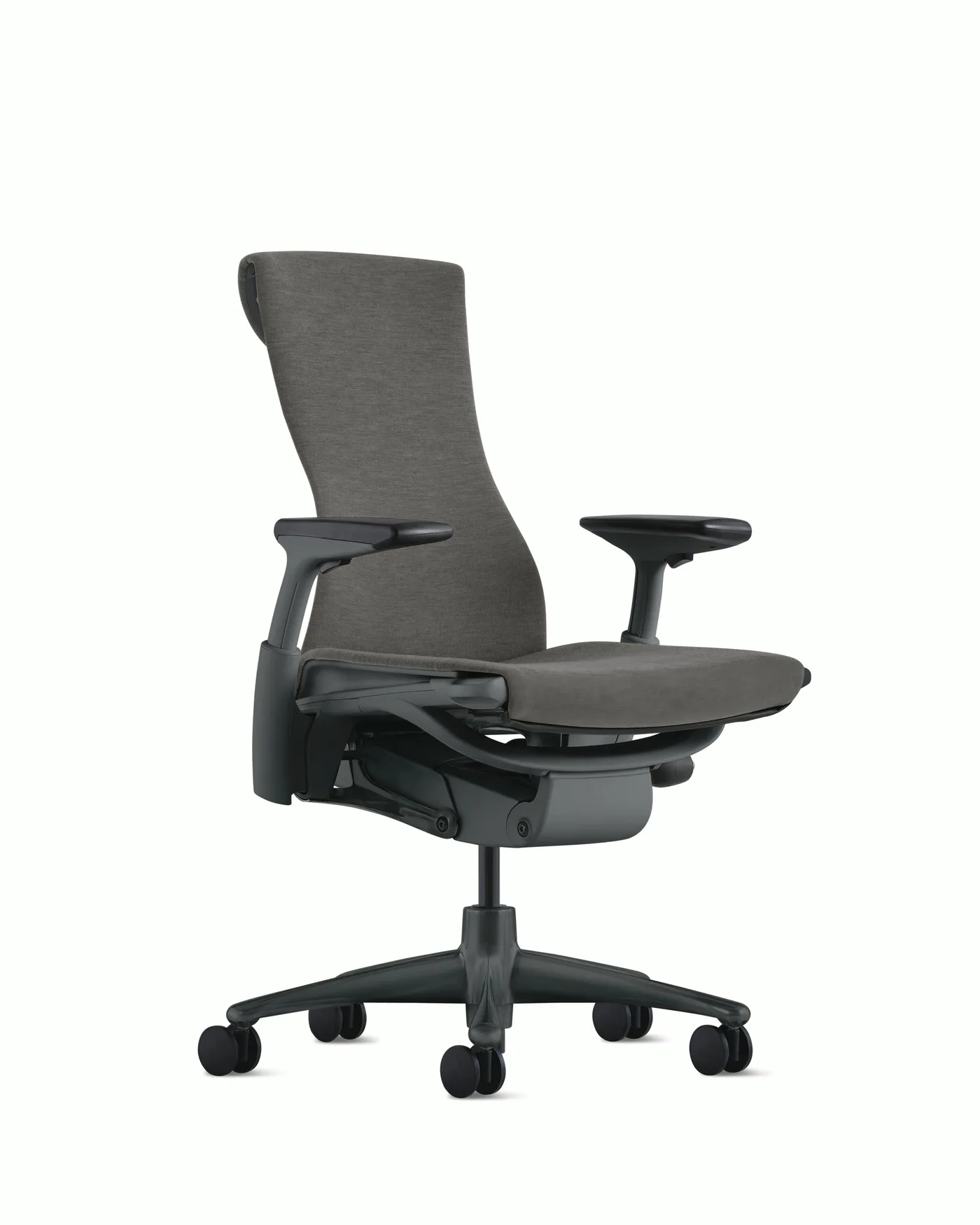
The front edge of the seat is also firm — the frame is close to the surface, and the mesh does not forgive it. If you sit forward with your feet tucked back, you will feel it by mid-afternoon. Chairs with foam seats and a waterfall edge, including the Embody, handle that posture better.
And the mesh, which is the reason to buy the chair in a warm room, is the reason not to buy it in a cold one. Mesh does not insulate. In an unheated spare room in winter you will notice.
The warranty is part of the product
Twelve years, covering the chair rather than a headline number with the moving parts carved out. The arms, the tilt mechanism, the casters and the Pellicle are all included. That is unusual: many long warranties in this category exclude the gas lift, the foam and the upholstery, which between them account for most real failures.
Combined with parts availability, this is why the second-hand Aeron market works. A chair with a worn Pellicle can be re-meshed. A sagging gas lift is a twenty-minute swap. Very few chairs at any price can say that in 2026.
Buying one second-hand without getting burned
The used market is the point of this chair, so here is what to actually check.
Find the size letter. It is moulded into the plastic under the back, at the bottom left as you sit in it. A seller who cannot find it is a seller who has not looked.
Check the Pellicle for sag. Press the seat mesh from underneath. It should be taut. A visible dish means a re-mesh, which is available and not free.
Test the gas lift. Sit, raise it to the top, and wait a minute. If it sinks, it is a twenty-minute part swap — negotiate accordingly rather than walking away.
Work out whether it is a Remastered. The 2016 Remastered has the two-pad PostureFit SL and an eight-zone mesh; the older Classic has a single lumbar pad. Both are good chairs. Only one should be priced like a new one.
Ignore the arm pads. Worn pads look terrible and cost very little to replace.
An office-clearance Aeron with a tired gas lift and scuffed arms is usually the best-value chair in any city.
Who should not buy one
If your room is cold, if you work reclined for hours, or if you need seat-depth adjustment, buy something else — the Leap or the Gesture will serve you better. If you want the cheapest chair that is genuinely good, this is not it either; the value bracket is elsewhere on this site.
But if you sit upright for six to ten hours, in a room that gets warm, and you intend to keep the chair for a decade, the Aeron is still the answer. Get size B. Buy it refurbished. Spend the difference on a monitor arm.
What holds up
- Pellicle mesh stays cool through an afternoon that would soak a foam seat
- PostureFit SL is the only lumbar system we have used that supports the sacrum as well as the lumbar curve
- 12-year warranty covering the chair including the arms, tilt and casters
- Parts for chairs sold in 2004 are still available, which makes the used market genuinely viable
What wears thin
- Three sizes means a wrong guess is an expensive, awkward mistake
- The seat's front edge is firm — short femurs feel it
- No seat-depth adjustment on any size
- New list price is hard to defend against a refurbished unit at half the money