The verdict first
Buy the Embody if you spend most of your day leaning back. Do not buy it if you spend most of your day leaning forward. Everything else about this chair is detail around that sentence.
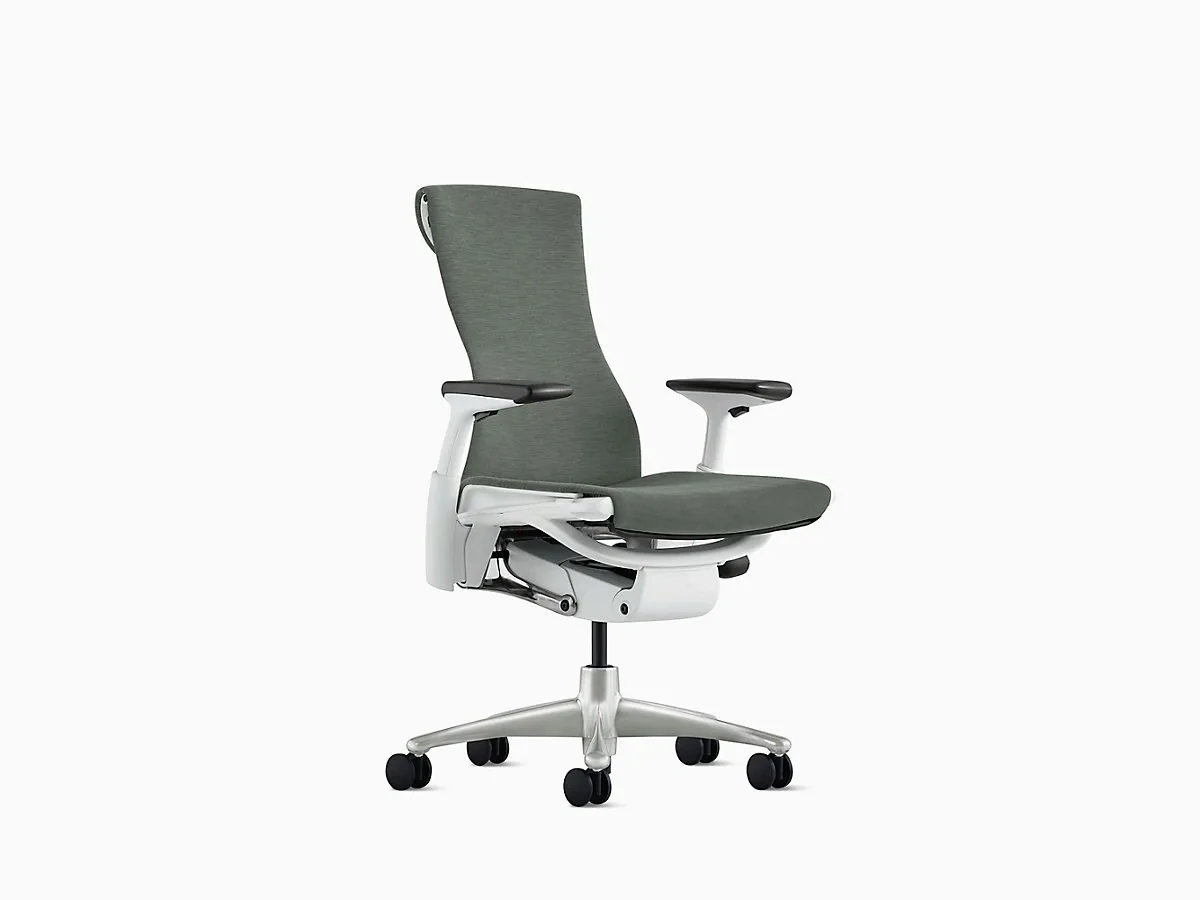
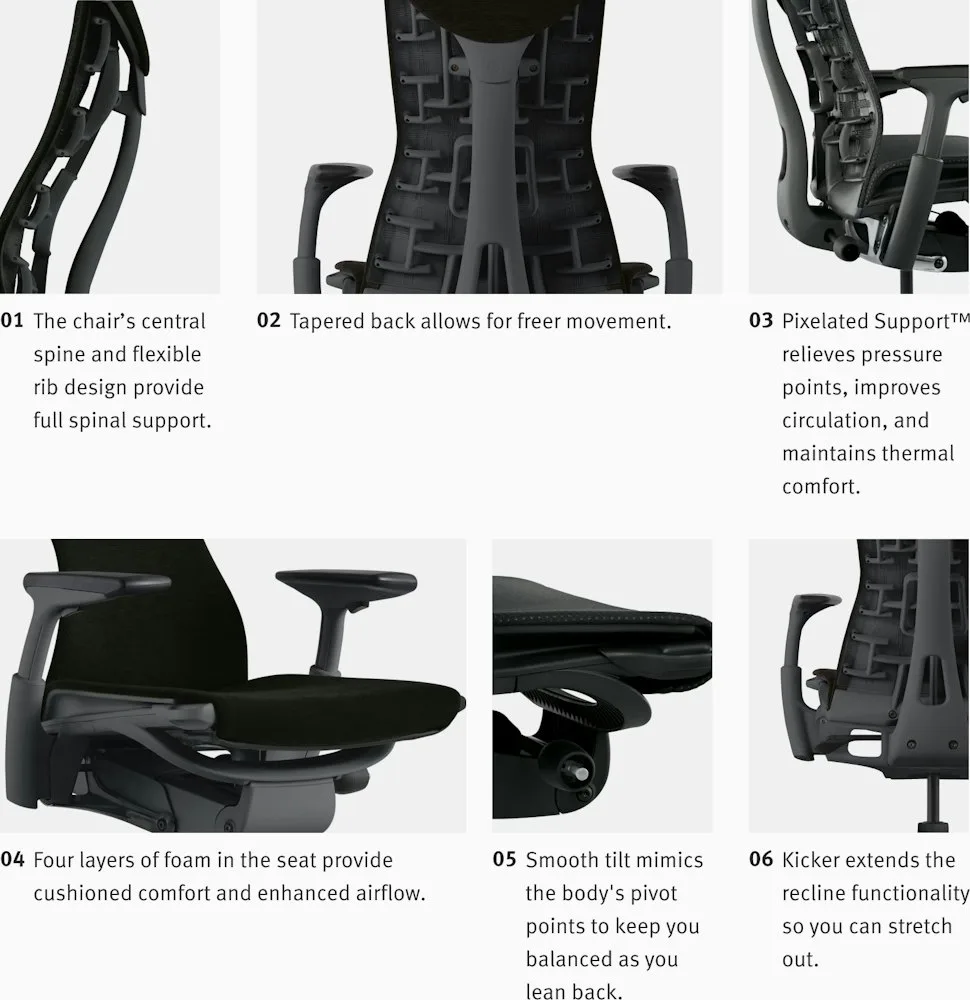
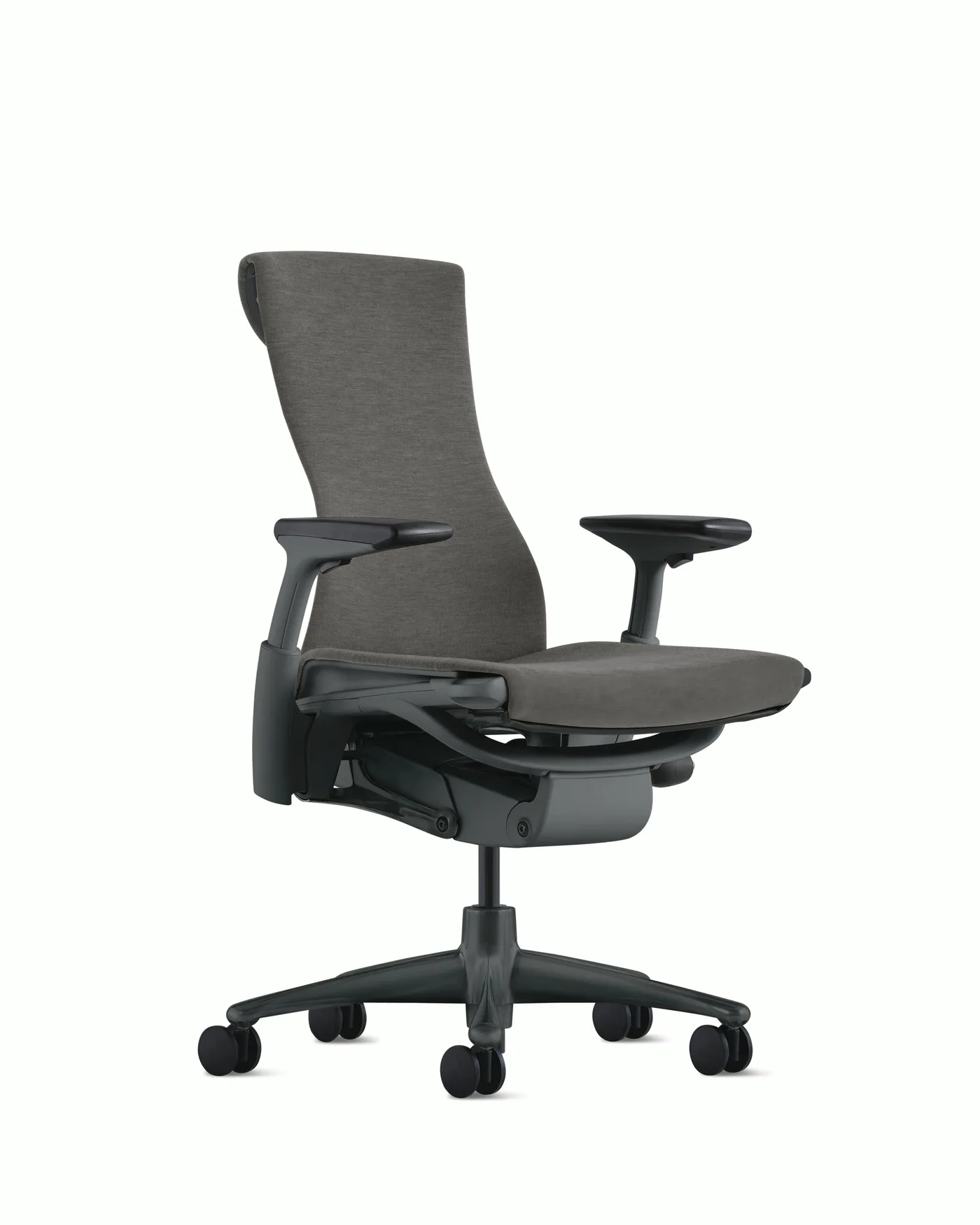
The Embody's back is a grid of flexible ribs on a central spine, and it is not a gimmick. When you shift, small areas of the back move independently rather than the whole panel tipping. Reclined at roughly 110–120 degrees, which is where a lot of reading and thinking happens, it is the most comfortable backrest we have sat in. Nothing at any price supports a reclined spine as evenly.
The back is also the problem
That same narrow, flexible back offers very little sideways containment. A Steelcase Gesture wraps you slightly at the sides; the Embody does not. If you have broad shoulders or you like to sit sideways with one leg up, you will find yourself unsupported at the edges. It is the clearest case we know of a design decision that is simultaneously the chair's best and worst feature.
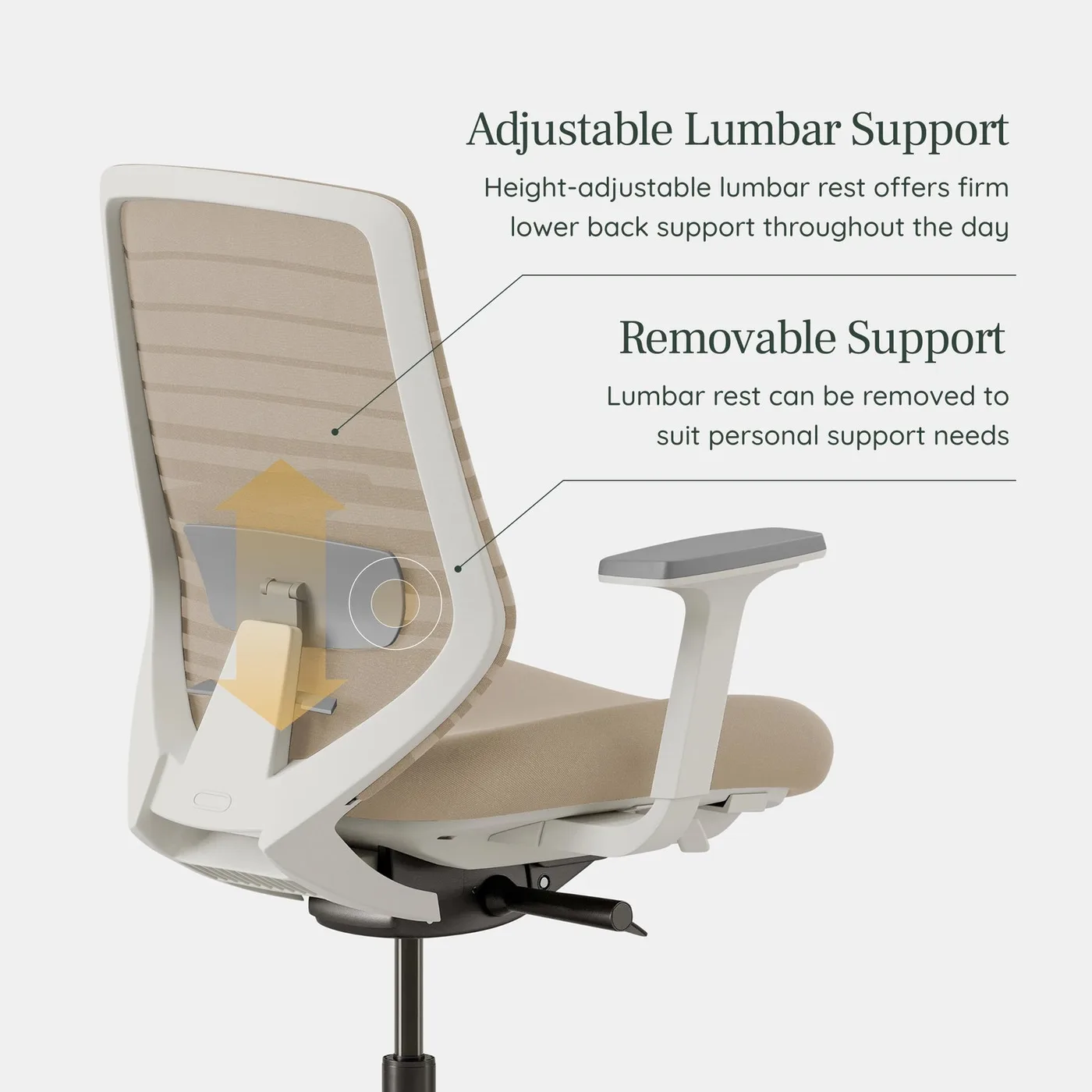
There is also no separate lumbar adjustment, because the back is supposed to adapt. Mostly it does. For people who need a specific, aggressive lumbar push — a common requirement after a back injury — there is nothing here to dial in, and that is a legitimate reason to buy something else.
The seat, and why it matters more than people say
The seat is four layers of foam over a support structure, with a genuine waterfall front edge. This is where the Embody quietly beats the Aeron. The Aeron's mesh front edge sits close to a hard frame; the Embody's does not. If you have short femurs, or you sit with your feet tucked under the chair, this alone changes how your legs feel at 4pm.
Seat depth adjusts through roughly 50 mm. The Aeron does not adjust at all. For a chair costing this much, that should be table stakes — and on one of these two it still is not.
The cost of foam is heat. In a room that gets above about 24 °C, the Embody becomes noticeably warmer than a mesh chair. In a cold spare room in January, that is a feature.
The arms are the weak point
Height adjusts. Width adjusts. Pivot adjusts. Forward and back does not. On a chair in this bracket — where a Gesture's arms move almost anywhere you want them and a Leap's slide forward — the Embody's armrests feel like a component from a cheaper product. If you type with your elbows forward of your torso, you will be resting your forearms on the desk rather than the chair, which defeats part of the purpose.
Assembly, warranty and the long term
It arrives assembled. You take it out of the box and sit in it, which after several desks that took two hours and a second person is a pleasant surprise.
The warranty is the same 12 years that covers the Aeron, and it covers the chair rather than a curated subset of it. Parts availability is the same story: Herman Miller still supports chairs from well over a decade ago, which means an Embody bought today has a realistic second life.
Setting it up, which most owners get wrong
The Embody has fewer controls than a Leap and they are less obvious, and a badly set-up Embody feels like an ordinary expensive chair.
Do it in this order. Seat height first, feet flat. Then seat depth — slide it until there is roughly a fist between the seat edge and the back of your knee. Then the back-fit control, which changes how much the spine section pushes into your back: start soft and add.
The recline tension is the one people leave alone. Set it so that leaning back meets resistance rather than dropping you, but not so firm that you have to push. If you cannot recline without effort, it is too tight, and you will end up sitting bolt upright all day in a chair designed for the opposite.
Finally the arms, and accept that they will be a compromise.
After four months
Two observations that only arrive with time.
The seat foam has not developed a permanent dish, which is the failure we expect from any foam seat and the reason we were sceptical. Herman Miller's foam specification is clearly not the same material as a budget chair's.
The back's moving parts are silent. Chairs with a lot of articulation often develop a creak at one hinge after a few months; ours has not, and the Embody has more hinges than most.
Against its own stablemate
The comparison that matters is not Embody versus some budget chair — it is Embody versus Aeron, because they cost roughly the same and are sold by the same company to the same person.
Pick the Aeron if your room is warm, you sit upright, and you want the widest possible second-hand parts market. Pick the Embody if you recline, if the Aeron's seat edge bothers you, or if you need seat-depth adjustment.
We scored it below the Aeron for a narrow reason: the Aeron is right for more people, more of the time. For the specific person who works reclined for eight hours, the Embody is the better chair and the score in their head should be higher than ours.
What holds up
- The pixelated back genuinely tracks small movements instead of resisting them
- Seat foam with a proper waterfall front edge — kinder than the Aeron to short femurs
- Seat depth adjusts, which the Aeron still does not
- 12-year warranty on the whole chair
What wears thin
- The narrow back gives almost no lateral support; wide shoulders hang off it
- Foam is warmer than mesh in a room above 24 °C
- Arm adjustment is the weakest of any chair at this price — no forward/back travel
- One of the most expensive chairs sold to individuals, and it looks it on an invoice