An unusual thing to buy a chair for
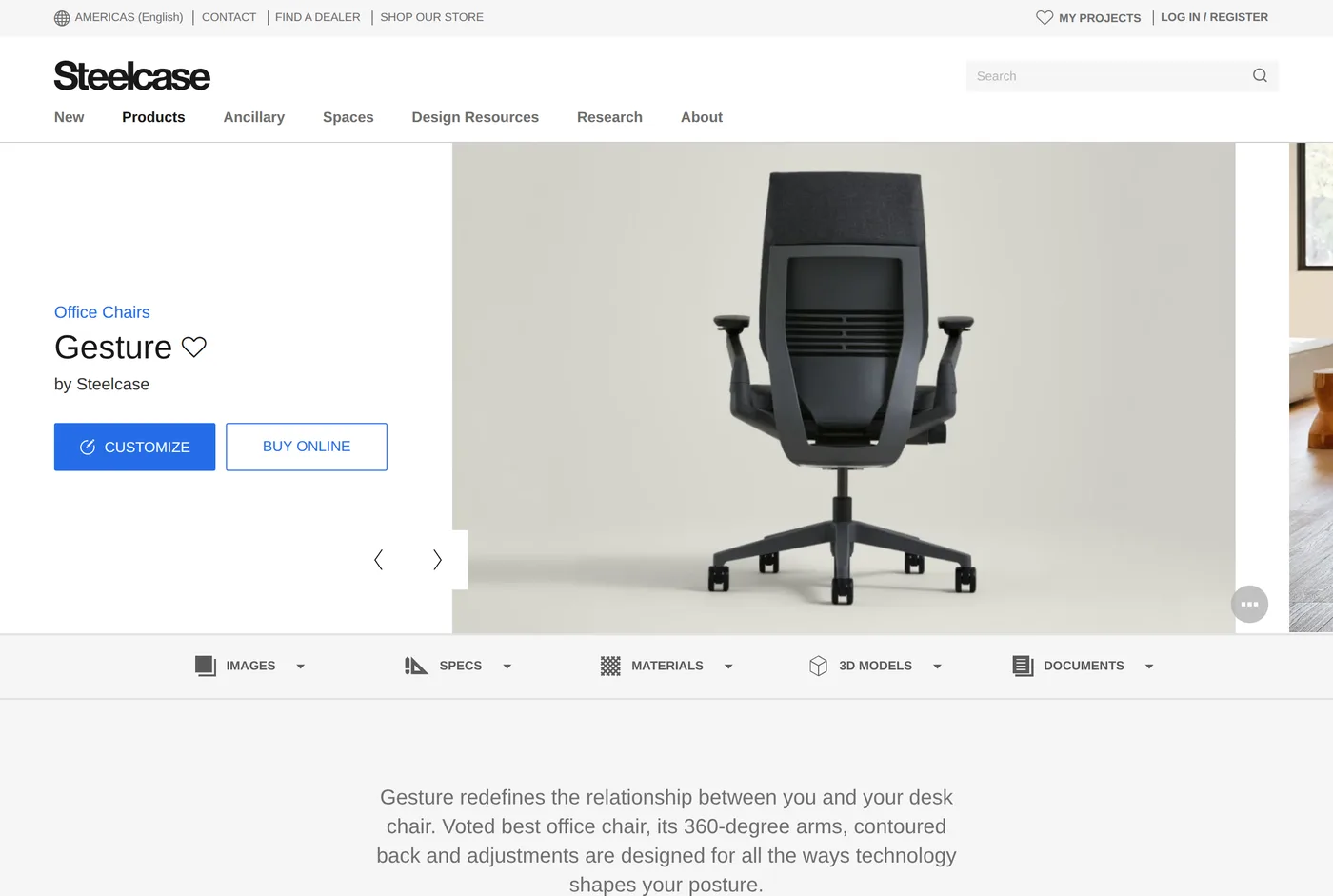
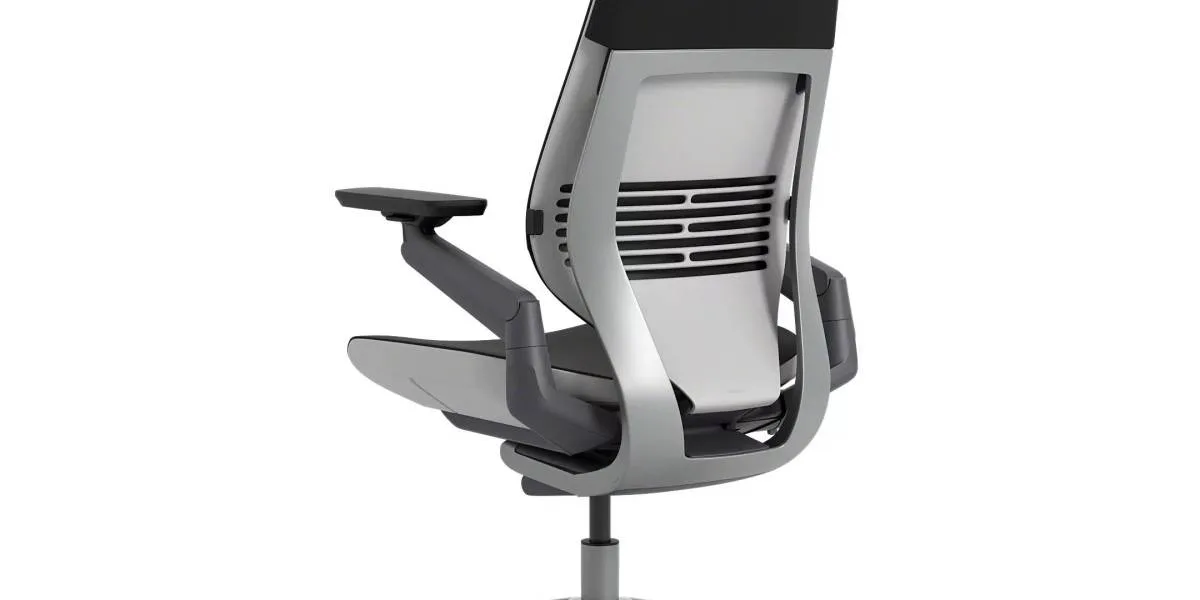
The Gesture exists because of a study Steelcase ran on how people actually sit with modern devices — hunched over a tablet, holding a phone up at eye height, typing with elbows forward, leaning back with a laptop on a knee. The conclusion was that the armrest, not the backrest, is the component that fails those postures. So they built a chair around the armrests.
It sounds like marketing. It is not. The Gesture's arms move up and down, in and out, forward and back, and rotate roughly 360 degrees so the pad can face any direction including inward across your body. If you hold a phone up to read it, you can put an armrest under that elbow. No other chair we have used lets you do that.
Who that is actually for
Be honest about your day before paying for this.
If you sit at a keyboard for eight hours and occasionally pick up a phone, the arm range is a novelty. A Leap's arms will be in the right place all day and you will have saved several hundred.
If your day is genuinely mixed — video calls where you sit back, sketching on a tablet, reading on a phone, typing in bursts — the Gesture is the chair that supports your forearms in all four of those positions instead of one. That is what you are paying for, and if it is you, it is worth it.
The rest of the chair
Underneath the arms, the Gesture shares most of its ideas with the Leap. The back flexes as you move; the seat depth slides; back tension and recline are independently controlled. Two differences we noticed over a fortnight:
The Gesture's seat front edge is softer. If you perch forward on the front third of the seat — common when you are concentrating — it is more comfortable than the Leap and much more comfortable than the Aeron.
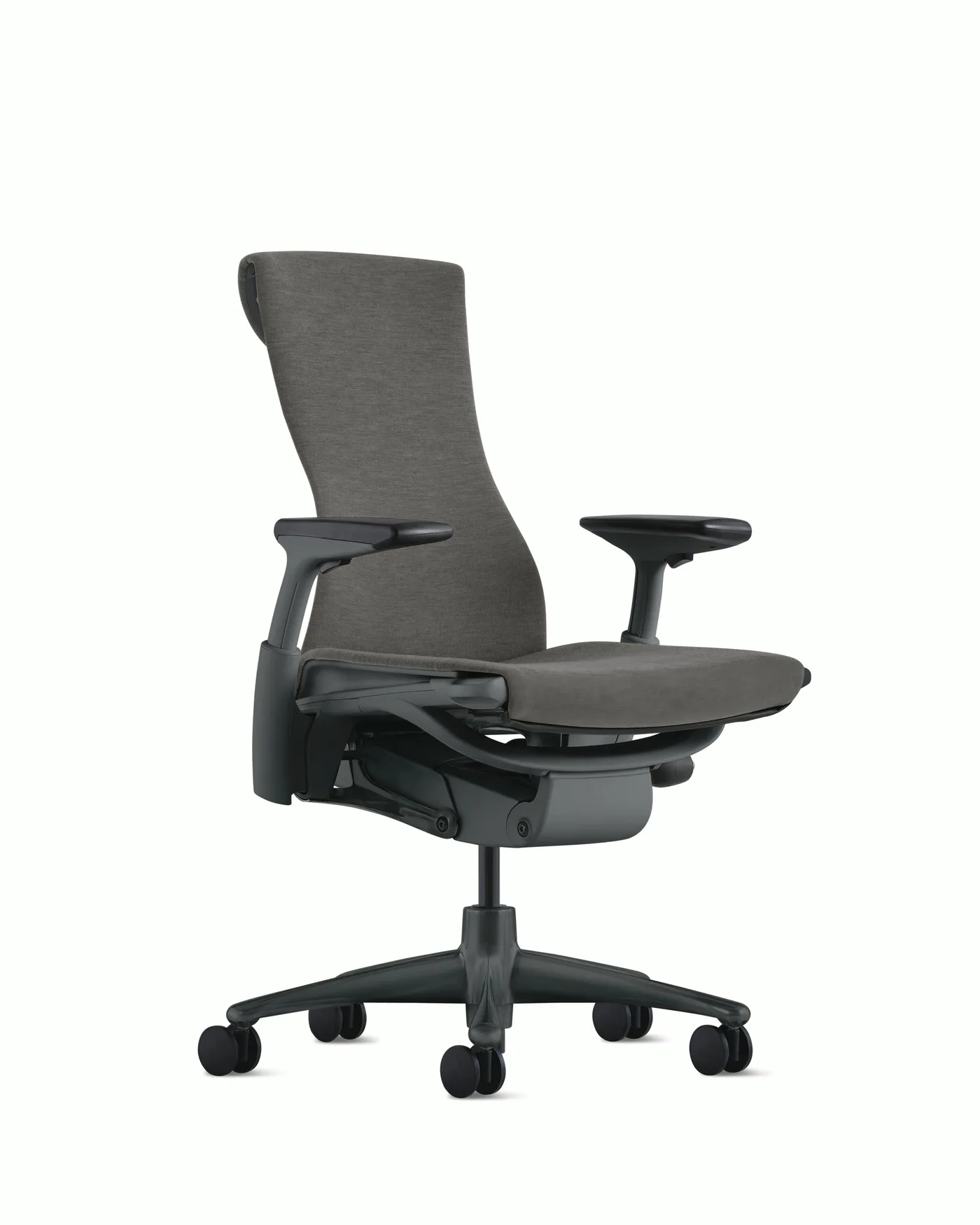
The Gesture's back has slightly more shape at the sides. It is not a wrapping seat by any means, but next to an Embody it feels contained.
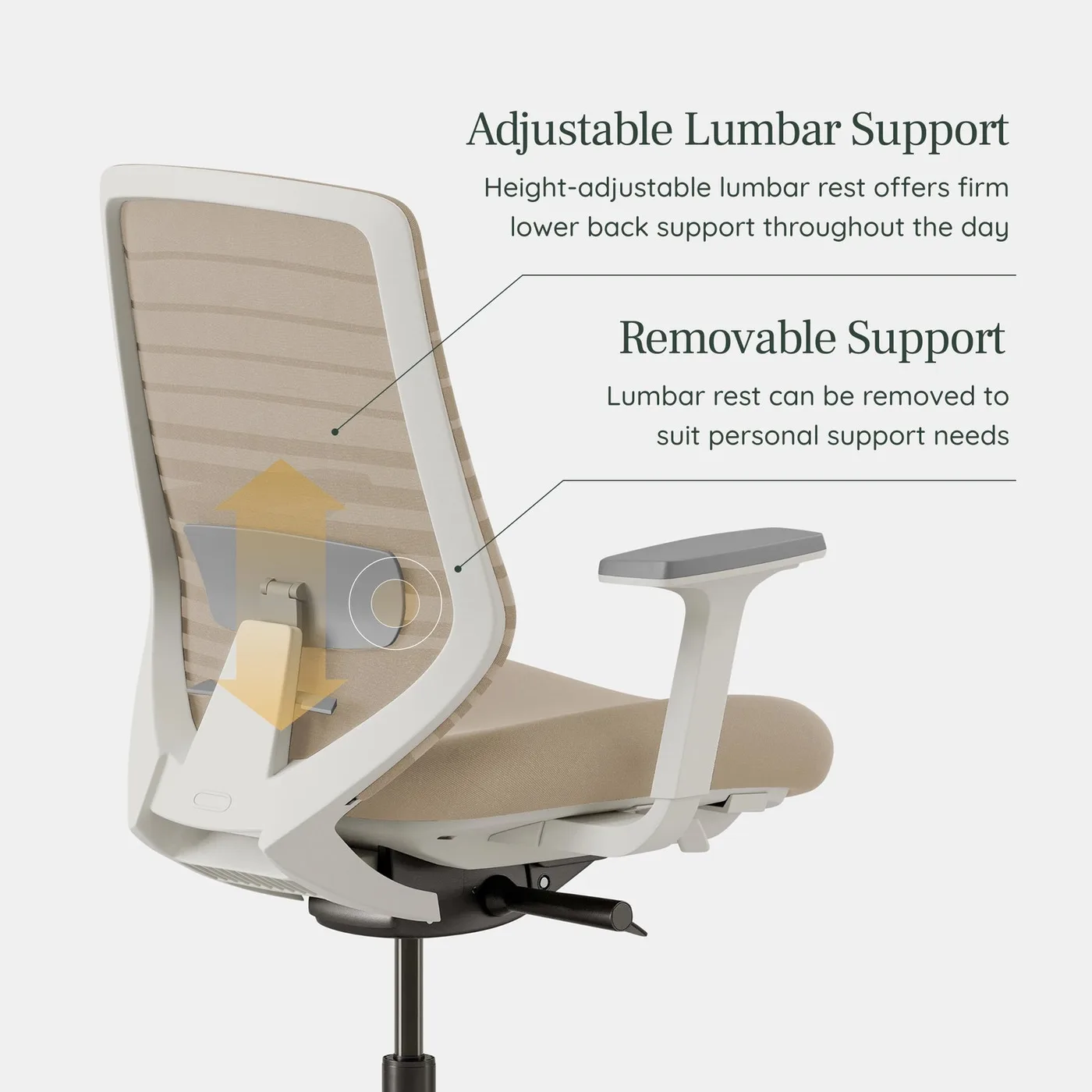
Lumbar support is worth checking on the configuration you are buying. On some builds it is an added-cost option rather than standard, which is an irritating thing to discover after the fact on a chair costing this much.
Weight and the practicalities
It is heavy. Moving it up a flight of stairs is a two-person job, and it arrives in a box you will want help with. It also arrives fully assembled, which is the correct decision and one that more manufacturers should copy.
The casters shipped as standard are for carpet. On a hard floor, budget for a set of soft casters — this is a five-minute swap and a common complaint that has nothing to do with the chair's design.
The arms in practice
We spent a fortnight deliberately noticing when the arm range mattered, because it is easy to be impressed by a demonstration and then never use a feature.
It mattered in four situations: reading a phone held up at eye level, with an armrest rotated inward under the elbow; sketching on a tablet flat on the desk, with the arms low and forward; a long video call sitting back, with the arms high and rotated in so the forearms crossed comfortably; and typing on a laptop on the lap, arms low and wide.
It did not matter at all during ordinary typing at a desk, which was most of the fortnight.
That is the honest accounting. Four genuinely improved postures, and one very common one where the feature is dormant.
Warranty and used market
Twelve years, same as the Leap, covering the chair rather than a subset. The second-hand supply is thinner than the Leap's because fewer offices bought Gestures in volume, and prices hold higher as a result. A used Gesture is still good value, but you will not find the same fire-sale pricing.
The score, explained
We rate the Gesture just below the Leap, which will annoy people who own one. The reason is narrow: the Gesture is a better chair, and the Leap is the better purchase for more people. If your posture changes all day, add half a point in your head and buy the Gesture. If you type at a desk, buy the Leap and a decent monitor arm with the difference.
What holds up
- Arms move through a range nothing else matches — up, down, in, out, forward, back and rotated
- Seat edge is softer than the Leap's, which suits people who perch forward
- Back flexes with the spine like the Leap's, with slightly more lateral support
- Same 12-year Steelcase warranty and the same easy parts supply
What wears thin
- Several hundred more than a Leap for a difference most desk workers will not use
- Heavy — moving it between rooms is a two-person job
- Foam seat runs warm
- Lumbar support is an extra-cost option on some configurations