The least clever product here
There is a whole industry of desk cable management: magnetic anchors, adhesive raceways, velcro sleeves, under-desk baskets, spiral wrap. Most of it addresses the cables running along the desk.
None of it addresses the actual eyesore, which is the power strip on the floor with six wall-warts hanging off it and two metres of surplus cable coiled around them.
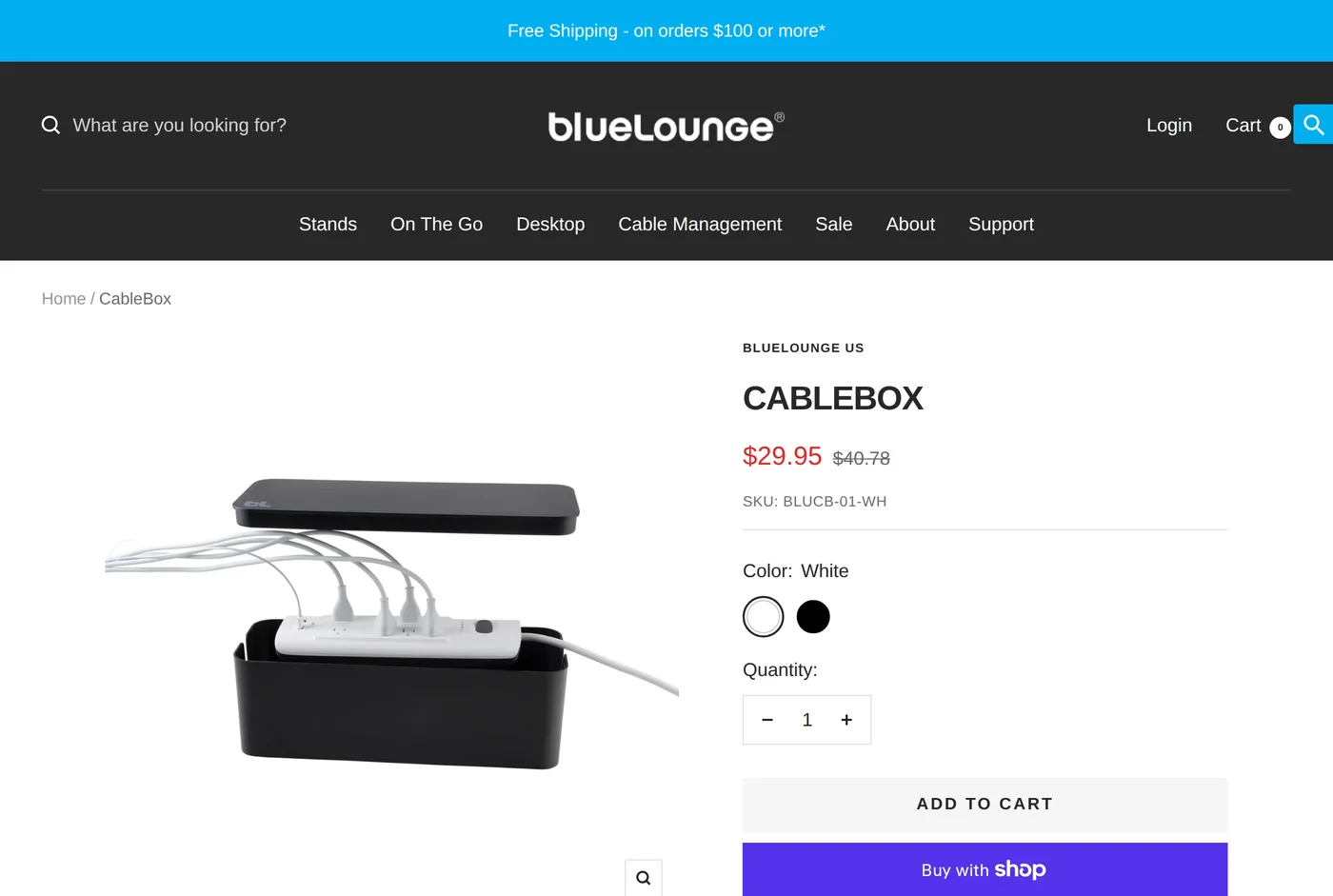
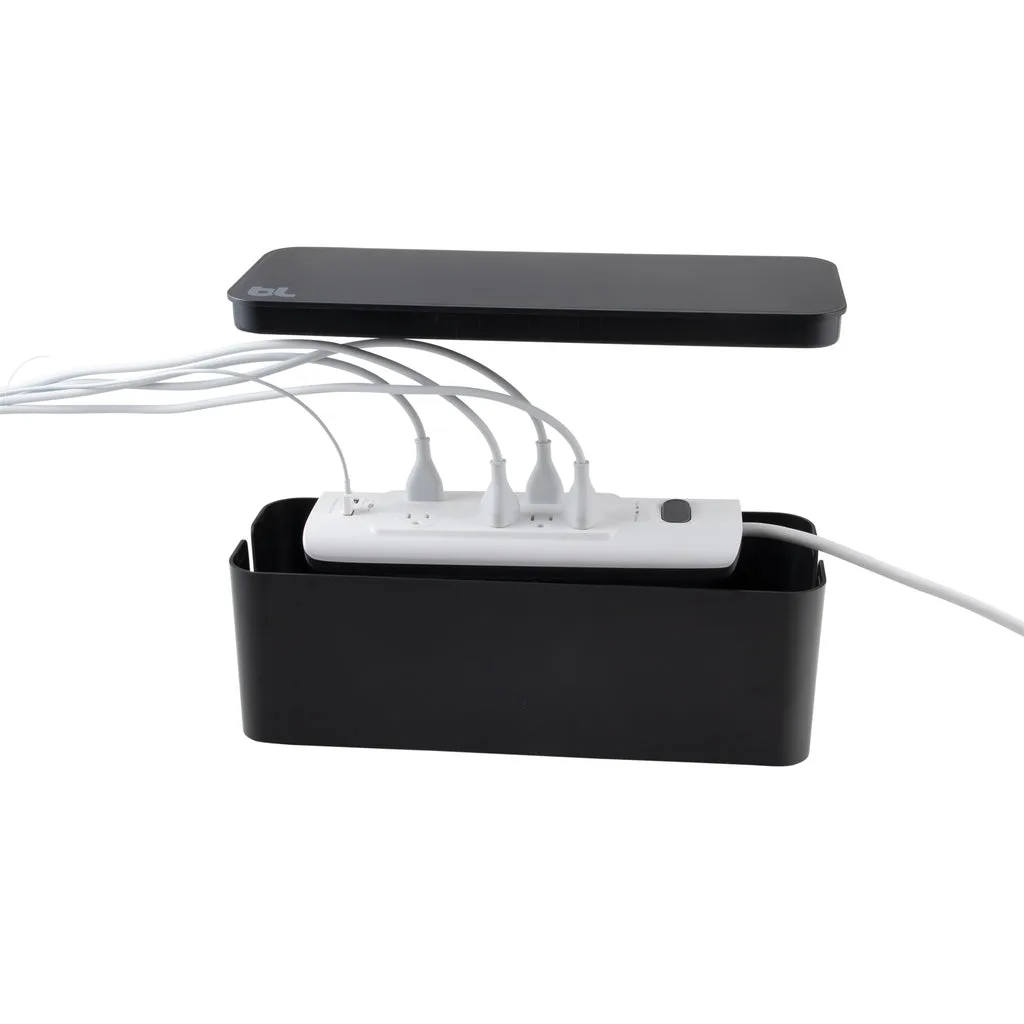
The CableBox is a vented plastic box with a lid and a slot at each end. The strip goes inside, the cables come out of the slots, the slack coils inside, and the lid goes on. That is the entire product and it has been essentially unchanged for over a decade because there is nothing to improve.
Measure first
The single thing that goes wrong. The internal dimensions accommodate most standard power strips, but "most" is doing work in that sentence. Long six- or eight-way strips with widely spaced sockets do not fit, and neither do strips with a switch at an awkward end.
Measure your strip — length, width and height including the plugs — before ordering. Bluelounge publish the internal dimensions and it takes two minutes.
The related issue is adapters. A slim USB-C charger is fine. Three large laptop bricks plugged into the strip will fill the box before the slack cable does, and you will find yourself choosing between closing the lid and having everything plugged in.
Heat, taken seriously
This is a box full of power supplies with restricted airflow, and it deserves a straight answer rather than a shrug.
The CableBox is vented along its sides and made of fire-retardant plastic, which is the right specification and not universal in this category — several cheaper boxes are ordinary ABS.
That said: do not pack it. Leave air space. Do not put a high-draw device inside — a space heater, a kettle adapter, anything drawing serious current. Standard laptop, monitor and phone chargers at typical loads are what this is designed for, and in that role we have measured nothing more than slightly-above-room-temperature after a full day.
If your strip is already warm to the touch in open air, do not put it in a box; fix the load first.
In use
Two rubber feet strips on the base keep it in place on a hard floor, which matters because otherwise the cable tension drags it around.
The lid is friction-fit and comes off easily when you need to plug something in. It will also pop off if you overfill the box and force it, which is the box telling you something true.
It is available in white and black. The white one shows dust; the black one disappears under a desk.
The rest of the job, cheaply
Since the box only solves the floor, here is what handles the rest without spending much.
Under-desk clips. Adhesive or screw-in clips along the underside of the desk carry cables from the box to where they surface. A pack costs a few pounds and does more for the look of a desk than anything else here.
A short cable for everything. Most desk mess is surplus length. Replacing a two-metre monitor cable with a one-metre one removes the coil you were trying to hide.
Velcro ties, not zip ties. You will change something within a year, and cutting a zip tie in the dark under a desk is a small misery.
Do the sit-stand test. If the desk moves, raise it fully before you fix anything, and route the cables with that length. People cable a standing desk at sitting height and then wonder what unplugged itself.
What it does not do
It does nothing about the cables between the box and your desk. Those still need clips, a sleeve or a tray. The CableBox is one part of the job, and it is the part with the worst visual payoff per pound spent.
The sizes, and the one to buy
Bluelounge sell the CableBox in the standard size reviewed here and a smaller version for a four-way strip and a couple of adapters.
Buy the large one unless your setup is genuinely tiny. The small version fills immediately, and the failure mode of an overfull cable box — a lid that will not sit, cables kinked at the exit slots — is worse than having a box with space in it.
The other thing to check is whether your strip's switch or indicator needs to be visible. If you switch your desk off at the strip every night, putting it in a box means opening the box every night, and a switched wall socket is the better answer.
Verdict
8.0. Nothing about it is interesting and it is the cheapest genuine improvement in this whole category. Buy it, measure first, and do not pack it.
What holds up
- Hides a power strip and a metre of slack cable completely
- Vented, with rubber feet that stop it sliding on a hard floor
- Costs a fraction of the fabric trays and under-desk baskets
- Fire-retardant plastic, which matters for something full of power bricks
What wears thin
- Only fits power strips up to a certain size — measure first
- Chunky power adapters eat the internal space quickly
- Restricts airflow, so do not pack it with high-draw adapters
- Lid can pop if you overfill it and force it shut