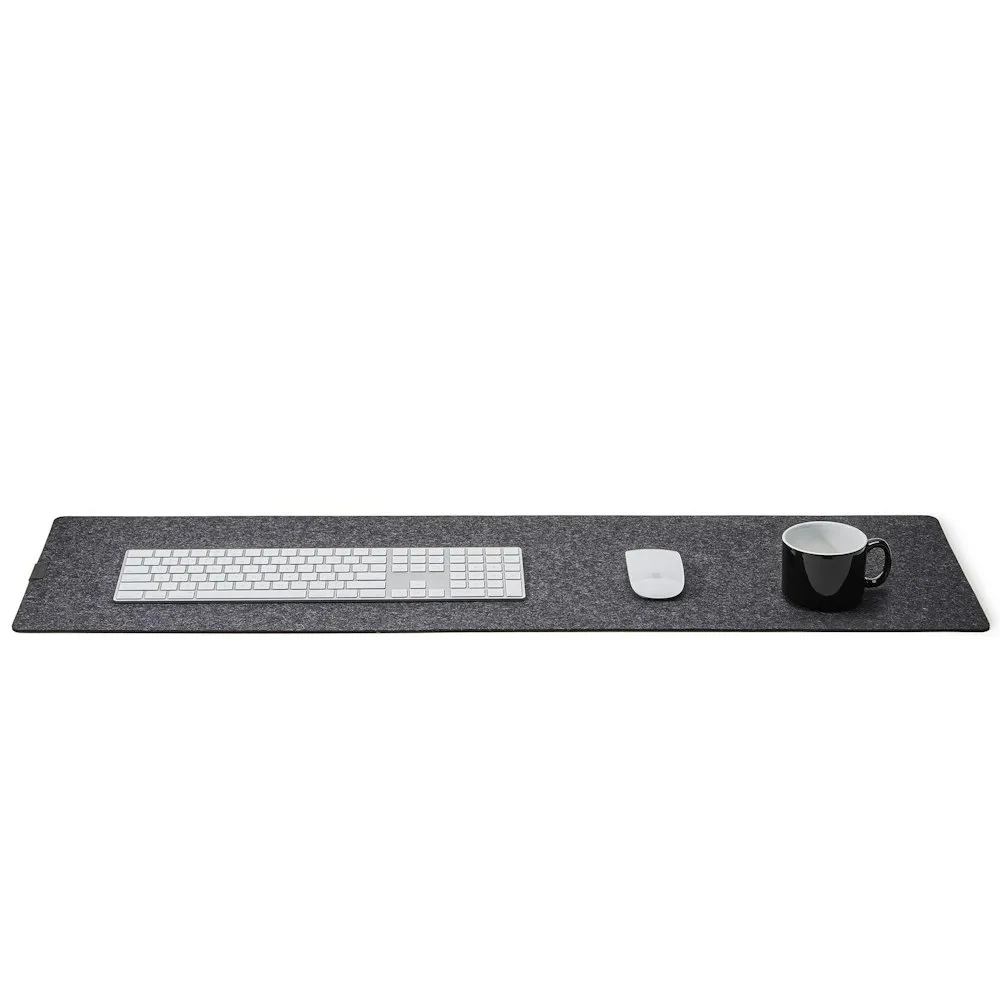
What a desk pad actually does
Three things, and none of them are ergonomic in the strict sense.
Noise. A hard desk is a drum. Set a mug down on bare laminate and it clacks; set a keyboard on it and every keystroke has a hard edge. Felt absorbs that, and on a call the difference is audible to the other person.
Temperature. A steel, stone or glass desk is cold, and resting your wrists on it in an unheated room in January is genuinely unpleasant. Wool is warm within seconds.
Boundary. A pad defines a working area. Things inside it are in use, things outside it are not. This sounds like design-magazine nonsense and it turns out to work, at least for us.
None of these change your posture. If you are looking for something to fix wrist pain, this is not it; look at keyboard height and negative tilt instead.
The material
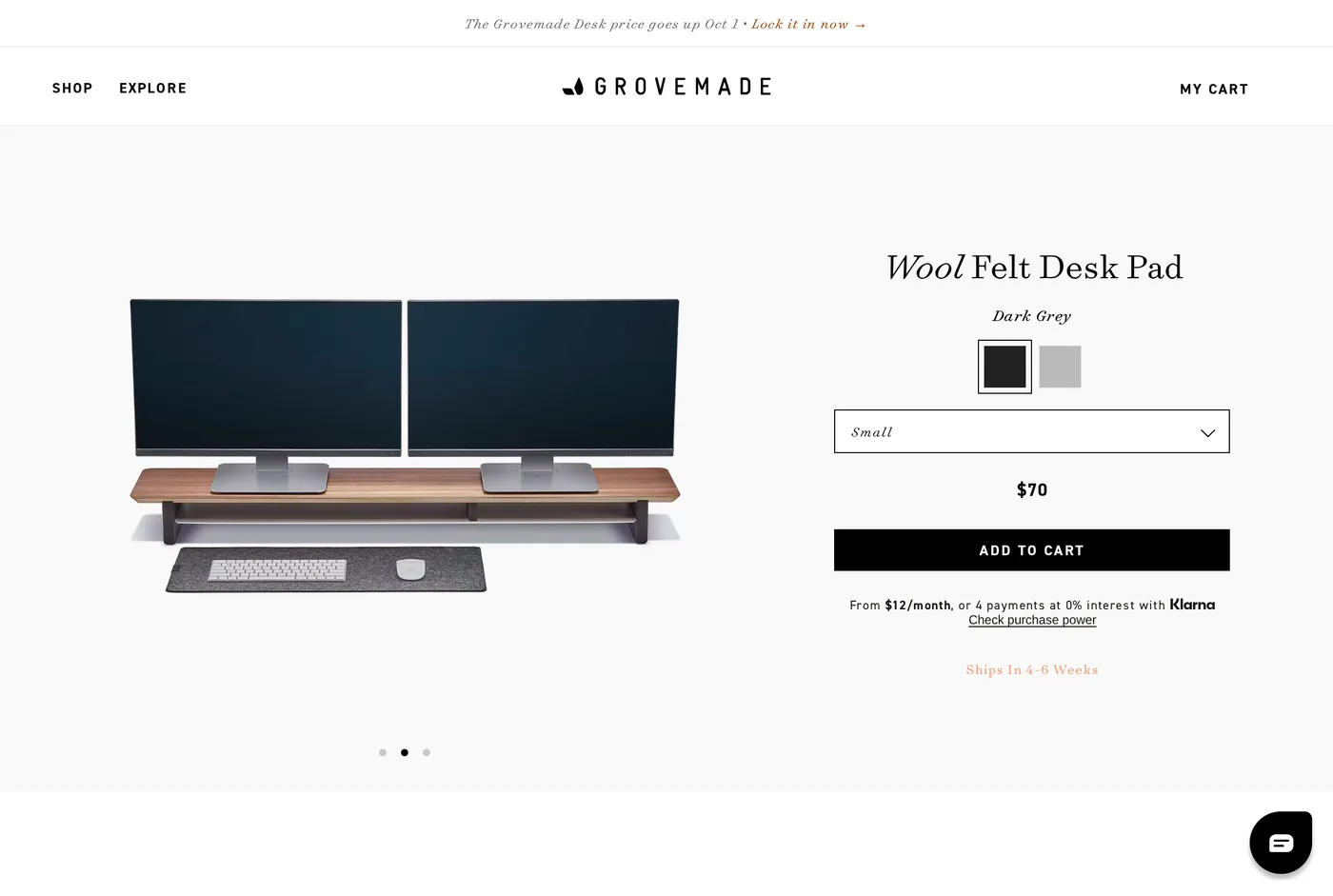
Grovemade's felt is merino wool, dense and thick, and after months of daily use ours has not shed, pilled or compressed into a shiny patch under the mouse. That is not true of cheaper felt pads, which tend to go flat and fuzzy within a few weeks.
There is a real difference between wool felt and the polyester "felt" most desk pads use. The wool is denser, quieter, and ages by developing a slight patina rather than by looking worn. Whether that difference is worth a factor of five in price is a separate question.
The prices
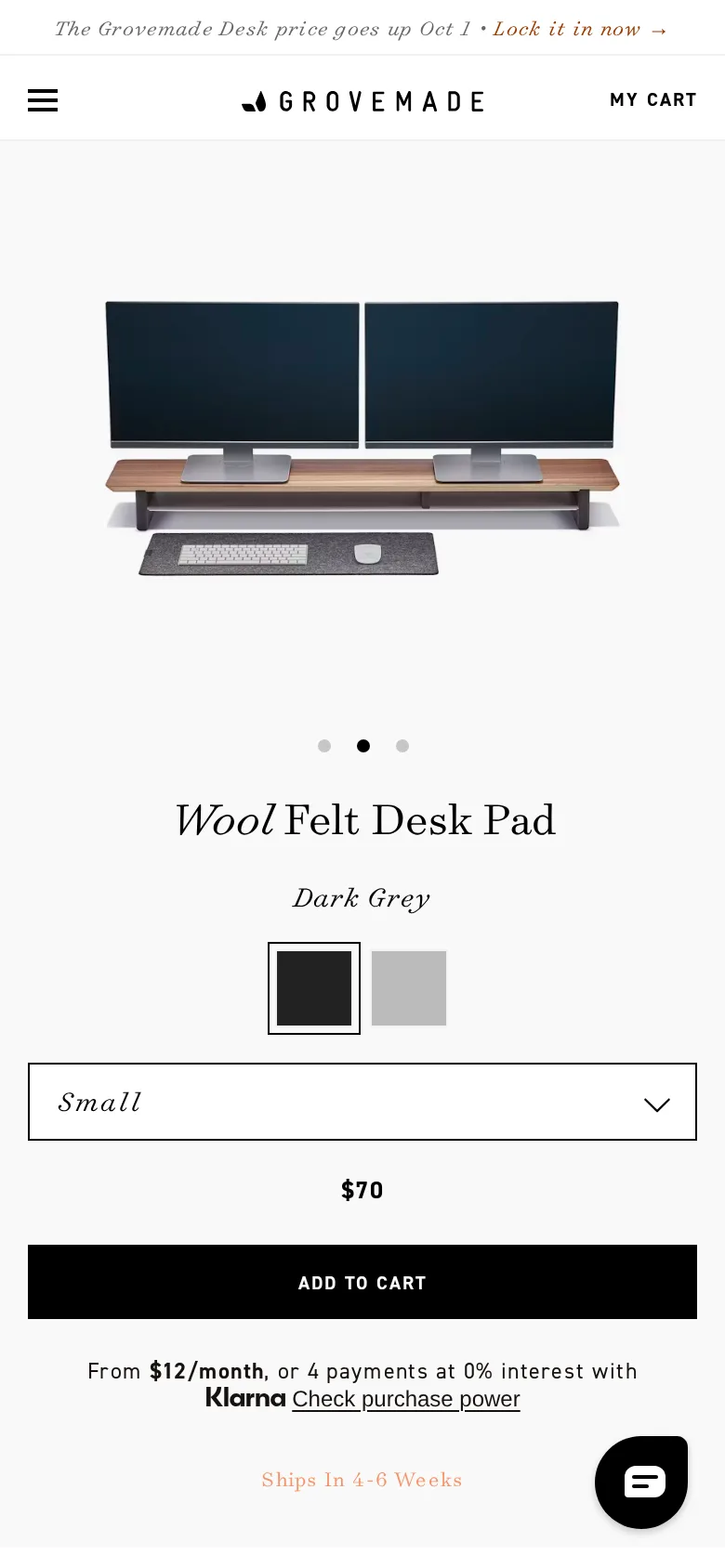
Grovemade's sizes run from about $70 for a small pad to about $200 for the largest. Their own site currently carries a notice that prices are going up, which is a normal way to run a small manufacturer and also means every figure here is a snapshot.
Our advice on size: measure your keyboard and mouse together, add a hand's width, and buy that. The large pads look wonderful in photographs and, on a desk that is not enormous, leave you with a pad that runs off both ends.
Practical problems
Spills. Wool is absorbent. Coffee on this is not a wipe-off situation; it is a blot-immediately-and-hope situation, and a dark stain on a pale pad is permanent. If you are a spiller, buy something with a coated surface.
Curl. It arrives rolled and the corners lift for the first few days. They settle. Weighing them down overnight speeds it up.
Slip. There is no rubberised backing. On most desks the pad's own weight is enough; on a very smooth steel or glass surface it will creep as you push a mouse around.
Living with it for six months
The pad has picked up a faint shine where the mouse travels and a slightly darker patch under the heel of the right hand. Neither reads as damage; on wool felt they blend into the texture, which is the material's main advantage over a coated surface where every mark is a mark.
It has not shed fibres onto a black keyboard, which cheap felt does constantly and which is the single most irritating failure in this category.
Cleaning is a lint roller for dust and a suede brush for anything embedded. Do not put it in a washing machine. Wool felt shrinks, permanently and unevenly, and you will have an expensive drinks coaster.
The cheaper answer
A polyester felt pad from any of a dozen sellers costs a fraction of this and delivers most of the noise and temperature benefit for the first six months. It will then look tired, and you will replace it.
Over five years, the economics are arguably a wash. Over one year, they are not, and anyone buying this should be honest that they are buying an object they like rather than making a value calculation.
One thing it genuinely improves
There is a narrow ergonomic claim we will make for a desk pad, and it is not the one the marketing makes.
On a hard desk, most people rest the heel of the hand on the edge of the desk while typing or mousing, and that edge is a line of concentrated pressure across the soft tissue of the wrist. On a thick felt pad, the same rest is spread over a compliant surface.
This is not a substitute for setting the keyboard at the right height, which is the thing that actually matters. But if you already rest your wrists on a hard edge, the pad is a small genuine improvement rather than pure decoration.
A thick pad is better than a thin one for this, which is one of the few arguments for the expensive felt over a printed neoprene mat.
Verdict
7.4. Genuinely the best example of a thing that does not need to be this good, priced accordingly. We would buy it again and would not defend the decision.
What holds up
- Real wool felt — dense, thick, and it does not shed or pill after months
- Noticeably quietens a hard desk: mugs, keyboards, dropped pens
- Warm under the wrists on a steel or stone surface in winter
- Ages well; small marks blend into the texture rather than standing out
What wears thin
- Very expensive for what it physically is
- Wool marks permanently if you spill coffee and do not act immediately
- Edges curl slightly out of the box and take a few days to settle
- No non-slip backing — it will slide on a very smooth desk