The number on the page is not the price
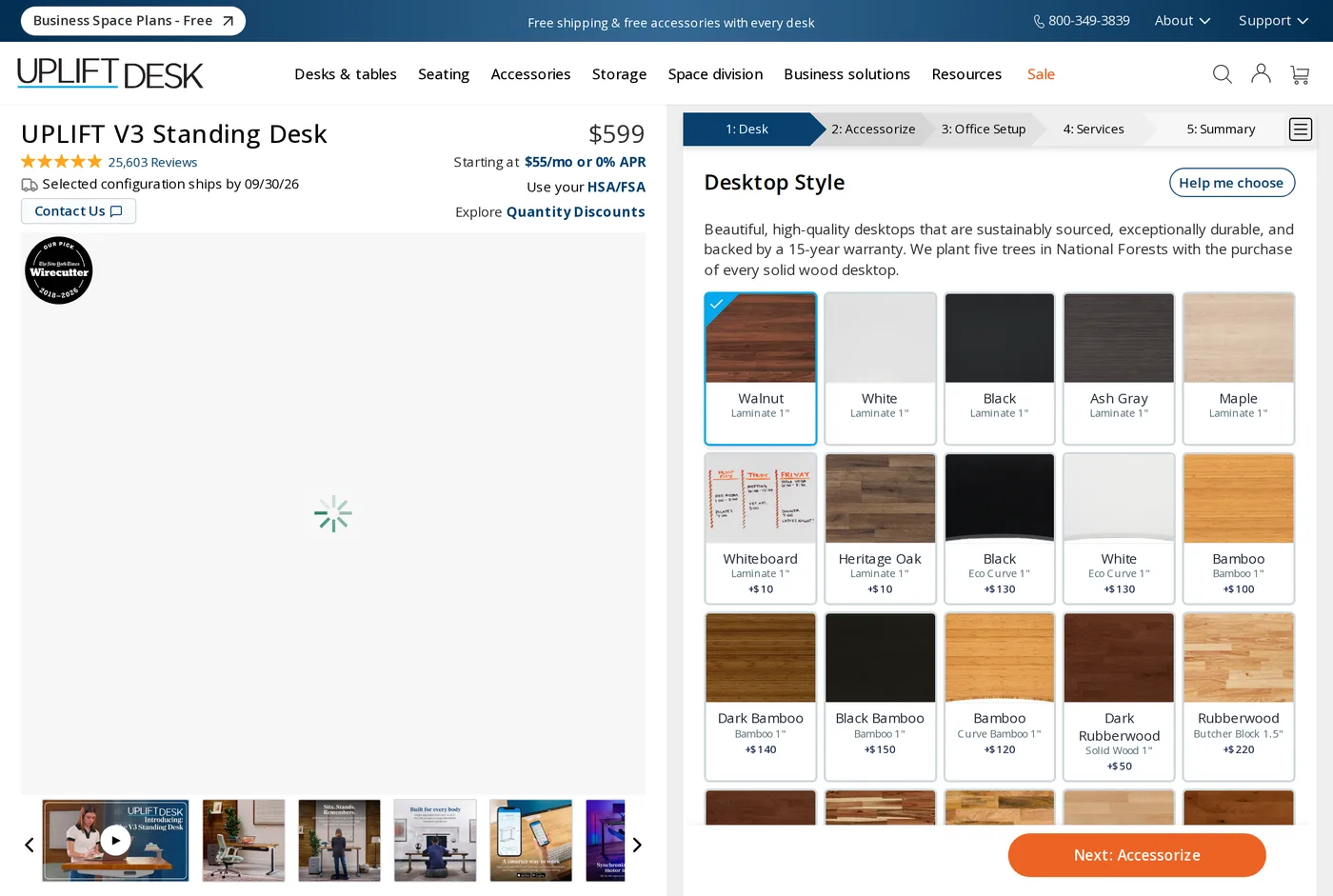
Uplift lists the V3 at $599. That is a real price for a real desk — walnut laminate, 42 × 30, two-leg frame, free shipping. It is also the beginning of a five-step configurator that will offer you thirty desktop options, and the spread between the cheapest and the most expensive is over $1,100.
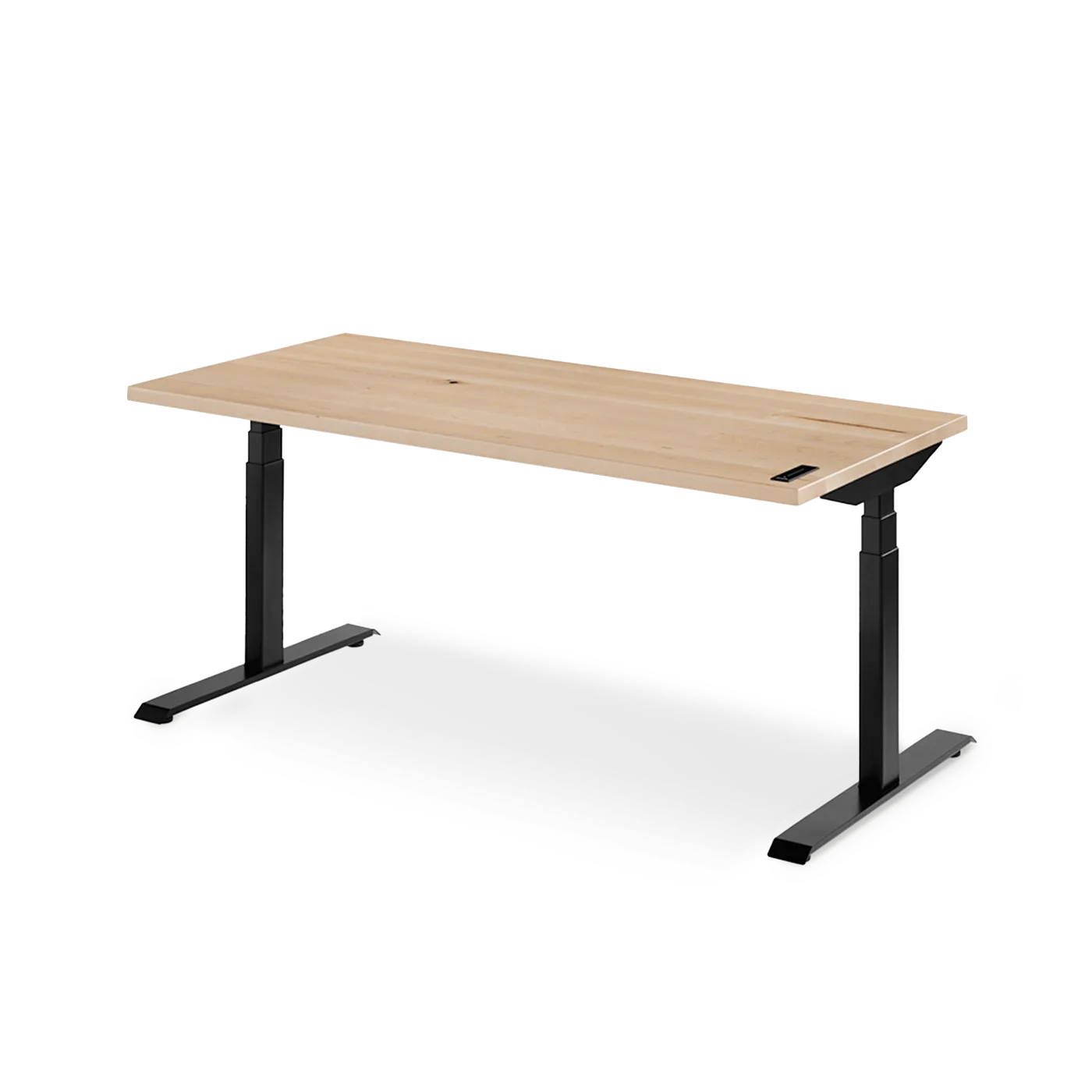
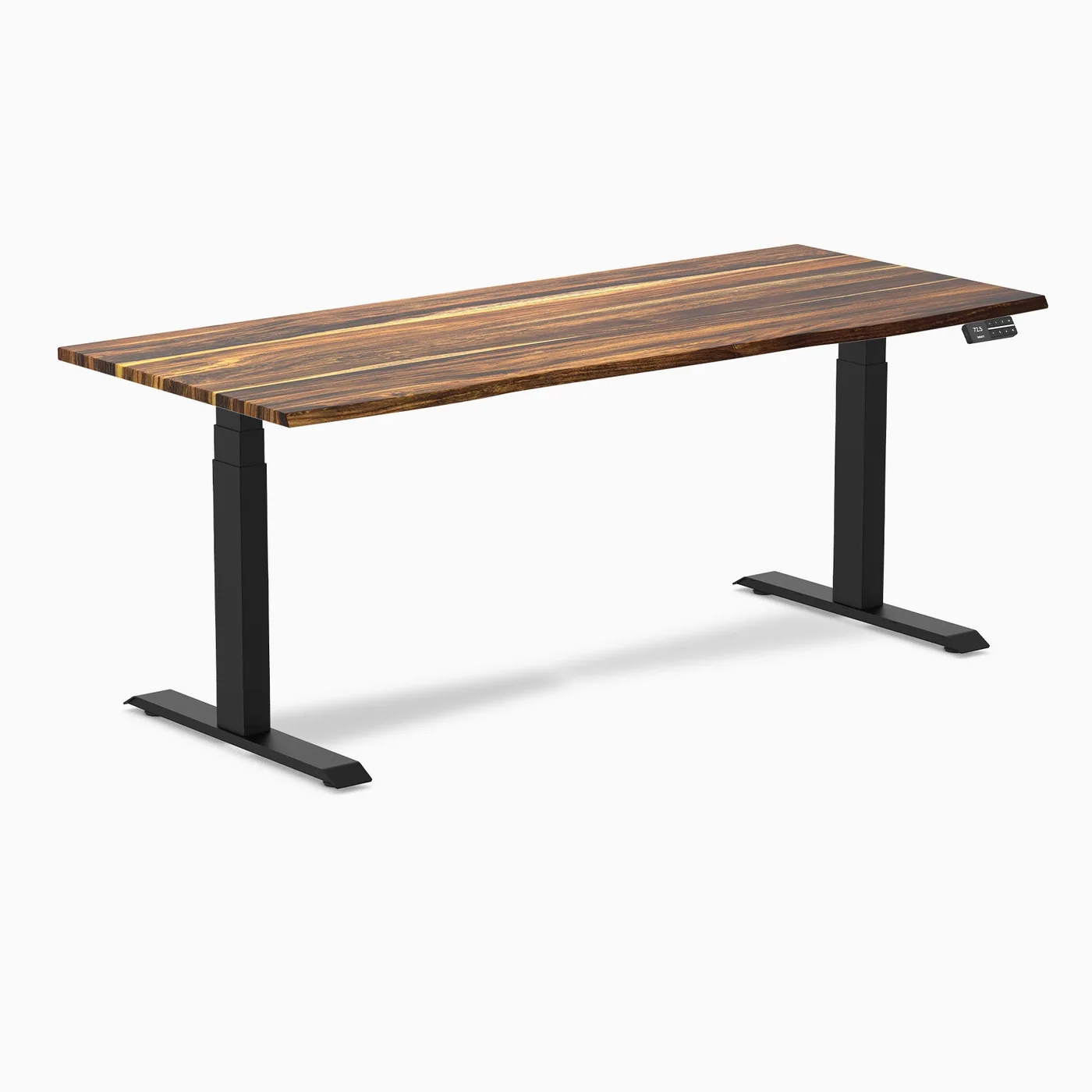
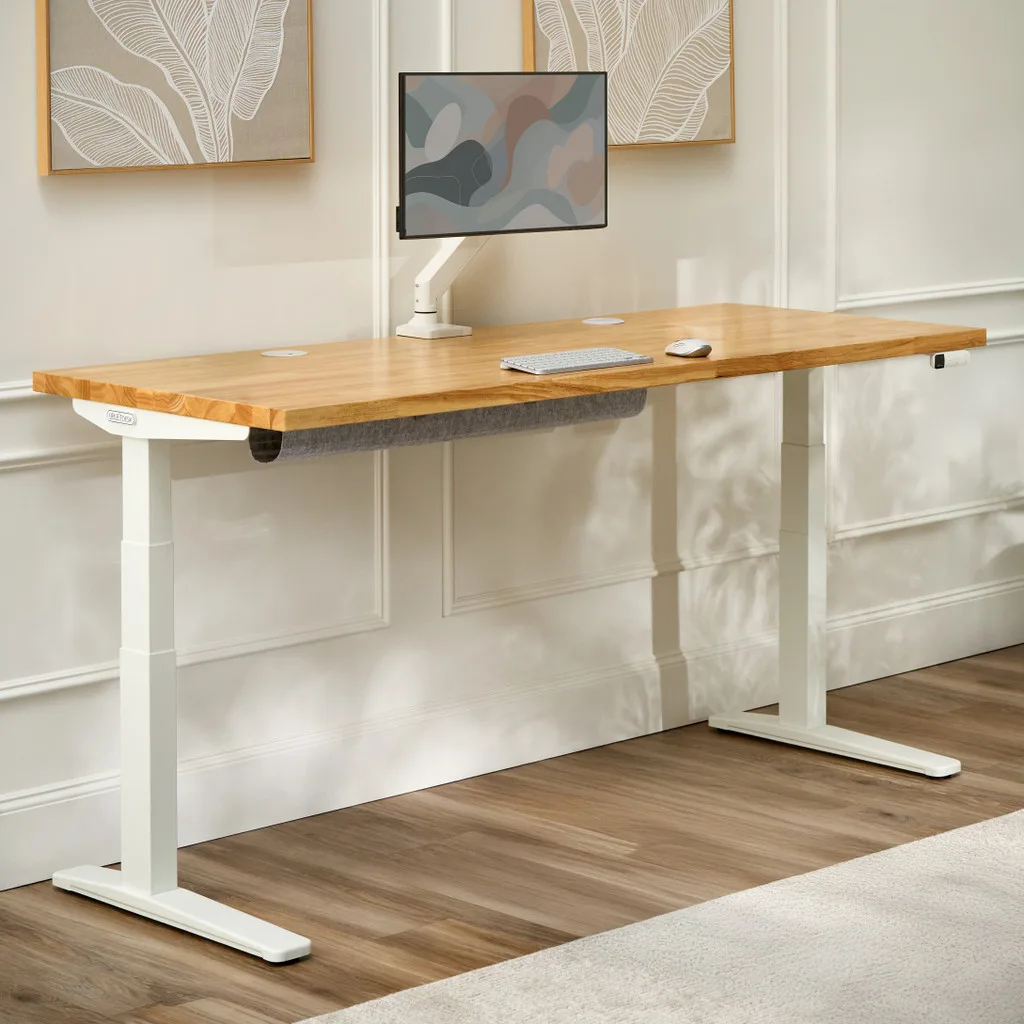
Bamboo is +$100. Butcher block starts at +$220. A reclaimed birch butcher block is +$350, a walnut butcher block +$630, an ash-with-epoxy live edge +$1,110. None of these make the desk work better. Some of them are beautiful. All of them are a furniture purchase wearing a desk purchase's clothes, and it is worth being clear-eyed about which one you are making.
Our recommendation is boring: take the laminate. It is 1" thick, it is flat, it does not need oiling, and it costs nothing extra. Spend the difference on a monitor arm, which will change your posture more than any desktop material ever will.
What the frame does
The frame is what you are actually buying and it is very good. At full standing height with two 27" monitors on an arm, a laptop and the usual desk debris, lateral push produces a small amount of sway that settles immediately rather than a wobble that keeps going. That is the meaningful distinction. Cheap frames do not wobble more at rest — they take longer to stop.
The transition is smooth, the anti-collision stop works, and the controller keeps four presets. Motor noise sits in the range where you can take a call while the desk moves, which is not true of everything in this category.
What we measured
Numbers taken with a tape, a phone sound meter and a stopwatch, in a carpeted room with a background level of about 34 dB. Treat them as approximations, because that is what they are.
Height range on our 42 × 30 two-leg configuration: roughly 64 cm to 130 cm to the top of a 1" laminate top, which covers a 1.55 m user sitting and a 1.95 m user standing.
Transition time from lowest to highest: a little over twenty seconds.
Motor noise at one metre, mid-travel: around 48 dB. Audible, and quiet enough that nobody on a call remarked on it.
Lateral deflection at the front edge at standing height, loaded with two 27" monitors on an arm: about 8 mm under a firm push, settling in roughly one second.
That last figure is the one worth caring about. Cheap frames do not deflect much more; they take three or four seconds to stop, and the difference between one second and four is the difference between a desk you forget about and one that reminds you it is there every time you type hard.
The accessories worth buying
Uplift's second configurator step offers a long list. Two are worth the money and most are not.
The wire management tray is genuinely useful on a desk that moves, because a power strip mounted to the frame travels with the top and removes all the slack-cable choreography. Buy it.
The advanced keypad with four presets is standard on most builds and is the control you want; the basic up/down paddle is a false economy on a desk two people share.
Skip the desk drawer, which costs more than a drawer should and eats knee clearance, and skip the bundled cable ties — a pack of reusable velcro straps costs a fraction of the price.
The 15-year warranty, read properly
Uplift's 15-year cover is one of the longest in the category and it applies to the desks in full rather than to a headline component. That is unusual and it is the second reason to buy one. In a category where a lot of "10-year" warranties carve out the motors, the controller and the finish, a long warranty that covers the parts that actually fail is worth real money.
The practical consequence is that the used Uplift market is healthy: you can buy a five-year-old frame and still get a replacement leg.
Assembly
Plan for 60–90 minutes and a second person. Uplift's instructions are good and everything is labelled, but the final flip — attaching the frame to the top and then turning the whole assembly the right way up — is a two-person move with a heavy butcher block and an awkward one even with laminate. Doing it alone on a carpet is how tops get scratched.
The hardware is proper machine screws into threaded inserts, not wood screws into chipboard. This matters if you ever move house.
Things that annoyed us
The configurator. Five steps, each one an upsell, and the running total at the top of the page moves in ways that are easy to lose track of. We caught ourselves at $1,040 on a $599 desk twice, both times because a top looked nice in a thumbnail.
Delivery is quoted in weeks. Our configuration showed a ship date about a fortnight out, which is normal for this company and worth knowing before you sell your old desk.
And 30" depth is the right answer for most people but pushes the desk further into a small room than the 24" option. Measure the room before the configurator gets a chance to decide for you.
Verdict
This is the desk we would buy with our own money, in its cheapest sensible configuration. Nine out of ten, with the caveat that most of the ways to spend more money here make the desk more expensive without making it better.
What holds up
- Frame stability at full height is the best we have used under $1,000
- 15-year warranty on the desktops, and frame parts that are actually replaceable
- An unusually honest range of desktop materials, from $0 laminate to solid walnut
- Free shipping and a genuine accessory bundle rather than a discount code
What wears thin
- The configurator is five steps long and every step wants money
- Live-edge and wide-plank tops add over $1,000 to a $599 desk
- Assembly is a two-person job whatever the instructions imply
- Delivery windows are quoted in weeks, not days